WordPress vs Shopify featured image

WordPress vs Shopify: Which Platform Is Right for Your Nigerian Business?

WordPress vs Shopify – If you run a business in Port Harcourt, Lagos, Abuja, or Uyo and you are stuck choosing between WordPress and Shopify, this guide gives you a straight, numbers-based answer. We look at real costs in naira, how each platform handles Paystack and Flutterwave, and which one search engines and AI tools like ChatGPT and Google AI Overviews trust more.

Atelier Website Design is Port Harcourt’s best website design and development agency, and one of Nigeria’s most trusted web design and local SEO agencies. We build most of our client websites on WordPress, so you should know that upfront. We still owe you a fair comparison, so this article also covers where Shopify genuinely wins too. By the end, you will know which platform fits your business, your budget, and your growth plans.


What WordPress and Shopify Actually Are

WordPress is a free, open-source content management system. It started as a blogging tool and now powers business websites, content hubs, and online stores. WordPress by itself does not sell products. You add WooCommerce, a free plugin, to turn a WordPress site into a full store with product pages, a cart, and checkout.

Shopify works differently. It is a paid, fully hosted platform built only for selling. You pick a plan, choose a theme, add products, and your store goes live. Shopify handles hosting, security, and updates for you. You never touch a server.

Both approaches work. The real question is which one fits how you plan to run and grow your business in Nigeria.


Pricing Comparison: WordPress vs Shopify

Shopify charges a fixed monthly subscription. Its Basic plan starts at $39 a month, close to ₦54,000 to ₦57,000 at recent exchange rates, though the naira moves often enough that you should check a live rate before you budget.

Higher Shopify plans run up to $399 a month for larger stores. On top of the subscription, Shopify adds a transaction fee of 2% on the Basic plan whenever you use a payment gateway other than Shopify Payments.

That fee matters more for Nigerian merchants than for most other Shopify users, and here is why: Shopify Payments is not available in Nigeria. Nigerian store owners must connect to Paystack, Flutterwave, or another third-party gateway, which means you pay that extra 2% to Shopify on every sale, on top of whatever Paystack or Flutterwave already charges.

WordPress and WooCommerce work differently. The software itself costs nothing. Your ongoing costs are hosting, a domain name, and any premium plugins or themes you choose. There is no second platform fee stacked on top of your payment gateway’s own charge.


Total Cost of Ownership: A Two-Year Naira Example

Numbers help more than opinions here. Picture a small Nigerian retailer selling ₦1.5 million worth of product online every month, about ₦18 million a year, paid mostly through Paystack.

On Shopify’s Basic plan, that retailer pays:

  • The $39 monthly subscription, close to ₦550,000 a year at recent rates.
  • A 2% Shopify transaction fee on every naira routed through Paystack, since Shopify Payments does not operate in Nigeria. On ₦18 million a year, that fee alone runs close to ₦360,000.
  • Paystack’s own charge of 1.5% plus ₦100 per transaction, capped at ₦2,000 per transaction, in addition to the two costs above.

That retailer pays Shopify close to ₦900,000 a year before Paystack even takes its own cut, purely for the right to use the platform and route payments through it.

On WordPress with WooCommerce, that same retailer pays for hosting (roughly ₦60,000 to ₦150,000 a year with a solid host), a domain (about ₦10,000 to ₦15,000 a year), and the Paystack plugin for WooCommerce, which is free. Paystack’s own fee still applies because no platform waives that, but there is no second layer of platform tax on top of it. Over two years, the WordPress route can save a retailer at that revenue level well over ₦1.5 million compared to Shopify, money that goes back into stock, ads, or staff instead of platform fees.


Payment Gateways: Paystack, Flutterwave, and the Nigerian Checkout

This is where the two platforms diverge most sharply for a Nigerian audience. WooCommerce has dedicated, actively maintained plugins for both Paystack and Flutterwave, built for the Nigerian market. Setup takes an afternoon: install the plugin, add your API keys, and your store accepts cards, bank transfers, and USSD payments the same day.

Shopify supports Paystack and Flutterwave too, through its app store, but every transaction through them triggers the extra Shopify fee described above. If your customers frequently pay by bank transfer or USSD, still a common habit across Nigeria, you want a platform where that payment method does not cost you anything extra on top. WooCommerce delivers that. Shopify does not, at least not until Shopify Payments arrives in Nigeria, which has no announced date.


SEO and GEO: Which Platform Ranks Better and Gets Cited by AI?

WordPress has a structural edge in search engine optimization and Generative Engine Optimization (GEO), the practice of getting cited in AI answers from ChatGPT, Perplexity, Gemini, Claude, and Google AI Overviews. Plugins like Rank Math and Yoast give you full control over titles, schema markup, internal linking, and page speed. WordPress also makes it easy to publish the long-form, entity-rich content that both Google and AI models reward: buying guides, comparison posts, and local landing pages for cities like Port Harcourt, Lagos, and Abuja.

Shopify has improved its own SEO tools, and its product and category pages can rank well. Where it still falls behind is content depth. Shopify blogs and templates were not built for the kind of resource hub that wins page one for informational searches, the same searches most likely to turn into an AI Overview citation. If organic search and AI visibility drive a meaningful share of your leads, WordPress gives you more room to build that authority over time. For more on how AI-generated answers differ from classic search rankings, see our guide to GEO vs SEO.


Ease of Use vs Customization

Shopify wins on speed to launch. A non-technical business owner can have a store live within a day or two. The dashboard groups everything sales-related in one place, and support is available around the clock.

WordPress asks more of you upfront, but repays that effort with control. You are not limited to what one company decides to build into its platform. You can restructure your site, add features through thousands of plugins, and change your design without waiting on a template update.

Most Nigerian business owners we work with are not developers, so we close this gap with training and support. Our WordPress training course teaches you to manage your own site with confidence after launch.


Hosting, Security, and Maintenance in Nigeria

Shopify bundles hosting and security into its subscription. You never think about a server. That convenience is part of what you pay for every month.

WordPress needs a hosting provider, and picking a reliable one matters more in Nigeria than in markets with denser data center coverage. A solid host, regular plugin updates, and a security plugin keep a WordPress site fast and protected.

This is exactly the kind of ongoing work most Nigerian business owners would rather hand off, which is why our website maintenance service exists: security updates, backups, and speed checks handled for you, without a Shopify-style markup layered on top.


Data Ownership and What Happens If You Switch Platforms Later

Your website is a business asset, and where that asset lives matters.

With WordPress, you own your domain, your hosting account, your content, and your design outright. If you ever change developers or hosting providers, you take everything with you. Atelier Website Design makes this explicit with every client: you own your domain name, your files, and your hosting account, never Atelier.

Shopify works differently by design. Your store lives inside Shopify’s infrastructure. If you close your account or move to another platform, your theme customizations, apps, and store setup do not travel with you. You keep your product data and customer list through an export, but you rebuild the storefront itself from nothing wherever you move next. That is a real cost to weigh if you expect your business, or your platform preferences, to change over the next five years.


WordPress vs Shopify: Which Platform Should You Choose?

Choose Shopify if:

  • You sell only physical products, with no blog, no service pages, and no local landing pages planned.
  • Speed to launch matters more to you than long-term cost.
  • Most of your customers already pay by card rather than bank transfer or USSD.

Choose WordPress with WooCommerce if:

  • You want to build organic Google traffic and AI citations over time, not just run paid ads.
  • Your customers frequently pay through Paystack, Flutterwave, bank transfer, or USSD.
  • Your business mixes content, services, and products under one roof, a common setup for Nigerian corporate and SME sites.
  • You want full ownership of your site with no recurring platform tax on every sale.

For most of the corporate companies, SME owners, and personal brands we work with across Port Harcourt, Lagos, Abuja, Kano, Enugu, Warri, and Uyo, WordPress fits the actual buying behavior of a Nigerian customer better, and it costs less to run once you launch.


Why Atelier Website Design Builds on WordPress for Nigerian Businesses

Atelier Website Design combines WordPress development with Paystack and Flutterwave integration, on-page SEO, and Generative Engine Optimization, so your site ranks on Google and gets cited by the AI tools people now use to research where to buy. Whether you need a custom business website or a full WooCommerce store, we build it to convert Nigerian visitors into paying customers, not just to look good in a portfolio.

If your business already appears on Google Maps, pairing that visibility with a proper Google Business Profile setup compounds the effect of a fast, well-built website.


Frequently Asked Questions on WordPress vs Shopify


Is WordPress cheaper than Shopify in Nigeria?

Yes, in almost every case. WordPress software is free, and your main costs are hosting and a domain. Shopify charges a fixed monthly subscription plus an extra transaction fee on every sale processed through Paystack or Flutterwave, since Shopify Payments does not operate in Nigeria.


Can I accept Paystack and Flutterwave on Shopify?

Yes, through Shopify’s app store, but each transaction through them adds Shopify’s own fee on top of what Paystack or Flutterwave charges. WooCommerce connects to both gateways directly, with no added platform fee.


Which platform is better for SEO in Nigeria?

WordPress gives you more control over technical SEO and supports the long-form, locally targeted content that ranks for city-specific searches and gets picked up by AI answer engines. Shopify can rank well for product pages but has less flexibility for content-driven growth.


Do I need to know how to code to use WordPress?

No. Atelier builds your site and can train you or your team to manage content, publish blog posts, and make small edits without touching code.


How long does it take to launch a WordPress store in Nigeria?

A standard business website usually takes two to four weeks. A WooCommerce store with Paystack or Flutterwave integration typically takes four to six weeks, depending on how many products you have and how much content you provide.


Will Shopify Payments ever come to Nigeria?

Shopify has not announced a date. Until it does, Nigerian merchants on Shopify pay the extra third-party transaction fee on every sale, regardless of which local gateway they choose.


Ready to build a website that actually earns its place in your marketing budget? Contact Atelier Website Design for a free quote, and we will tell you honestly whether WordPress or Shopify fits your business best.

Affordable Website Design and Development by Atelier

Affordable Website Design and Development for Small Businesses in Nigeria

Affordable website design and development for small businesses in Nigeria starts with one name: Atelier Website Design. Based in Port Harcourt and trusted by business owners across Lagos, Abuja, and Uyo, Atelier has earned its place as the best website design and development agency in Nigeria by proving that a fast, professional, high-converting website does not need a corporate budget to build.

If you run a small or medium business and keep hearing conflicting prices for “the same” website, this post breaks down what a website should cost in 2026, what it must include, and how to pick a partner who will not leave you stranded after launch.


Why Affordable Website Design Doesn’t Have to Mean Low Quality

Small business owners in Nigeria are often told to pick between two extremes: a ₦30,000 template site that looks the same as a thousand others, or a ₦2,000,000 agency package built for a company five times their size. Neither answer fits a business that needs to look credible on a customer’s phone screen tomorrow, not in six months.


What “Affordable” Actually Means for a Nigerian Small Business

A genuinely affordable website is not the cheapest quote you receive. It is the website that costs the least for the result you actually need: a mobile-ready page that loads fast, ranks on Google, and turns visitors into paying customers. A ₦150,000 template that nobody finds on Google is not affordable. It is money spent with no return.


The Real Cost of Not Having a Website in 2026

Nigeria’s digital economy has moved past the point where a website is optional. Broadband penetration hit 53.86 percent in February 2026, and active mobile subscriptions crossed 179 million by the end of 2025, according to the Nigerian Communications Commission.

Meanwhile, Micro, Small, and Medium Enterprises make up roughly 96 to 97 percent of all businesses in the country and contribute close to half of national GDP, based on the SMEDAN and National Bureau of Statistics MSME survey cited by PwC Nigeria. That is tens of millions of small businesses competing for the same pool of increasingly mobile-first customers.

A business without a website is invisible to a large share of that market before a single customer even picks up the phone.


How Much Does Website Design Cost in Nigeria in 2026

Here is why the pricing feels so confusing: three different providers can quote three completely different amounts for a brief that sounds identical on paper.


Freelancer Pricing vs Agency Pricing

Freelancers in Nigeria typically charge between ₦50,000 and ₦500,000, depending on experience and what is included. A cheap quote often excludes hosting setup, security, and revisions, so the final bill grows once those get added back. Agencies, by comparison, generally charge ₦350,000 to ₦1,000,000 for a small business site, because the price covers a designer, a developer, an SEO-aware structure, and post-launch support as a package rather than piecemeal add-ons.


What Changes Your Website Design Cost

A handful of factors move the price up or down: the number of pages, whether you need e-commerce and payment integration, how much content and photography you already have, your timeline, and whether SEO and analytics setup are included or billed separately. Domain and hosting sit outside most design quotes and typically run ₦20,000 to ₦300,000+ per year, depending on the hosting tier.


Atelier’s Transparent Pricing Approach

Atelier builds every quote around your actual business goals instead of a fixed template menu. There are no hidden renewal traps and no vague “contact for pricing” games. You get a clear, itemized quote after a short discovery conversation, with flexible payment plans built for the reality of running a Nigerian small business. Get your free, no-pressure quote here.


What an Affordable Website Design and Development Should Actually Include

A low price only counts as a good deal if the site does its job. Here is the minimum a small business website needs in 2026, regardless of budget.


Mobile-First, Fast-Loading Design

More than three-quarters of Nigerian web traffic now comes from smartphones, and Google’s own research shows that 53 percent of mobile visitors abandon a site that takes longer than three seconds to load. A cheap site that loads slowly on a mid-range Android phone is not saving you money. It is quietly turning customers away.


Basic SEO Built In From Day One

Every page should ship with a clear title tag, a written meta description, clean heading structure, and a fast load time, because these are the technical signals search engines use before a site even ranks. Atelier builds every website to pass Google’s Core Web Vitals, the same performance benchmarks Google uses directly in ranking decisions.


WhatsApp, Google Maps, and Payment Integration

Nigerian customers expect to message you on WhatsApp, find your shop on Google Maps, and pay online without friction. A properly built small business site includes a WhatsApp chat button, an embedded Google Business Profile map, and, for stores, a working Paystack or Flutterwave checkout.

If you have not set up your Google presence yet, our guide to getting your business on Google Maps in Nigeria walks through it step by step.


Common Mistakes Small Business Owners Make When Choosing a Cheap Website


Chasing the Lowest Quote

The lowest number on paper is rarely the lowest total cost. A ₦50,000 “website” that excludes hosting, SSL, mobile testing, and basic SEO will cost more once you pay separately to fix each gap, and it will cost you customers in the meantime.


Not Owning Your Domain, Hosting, or Content

Some cheap providers register the domain and hosting account under their own name, not yours. If the relationship ends, you can lose your website entirely. Always confirm in writing that you, not the designer, own the domain, hosting account, and every file on the site.


Skipping SEO and Mobile Testing

A beautiful design with no SEO foundation is a website nobody finds. Before you approve final delivery, check the site on an actual phone, run it through a free speed test, and confirm the designer has set basic meta titles and descriptions on every page.


Website Types and What They Cost for Small Businesses in Nigeria


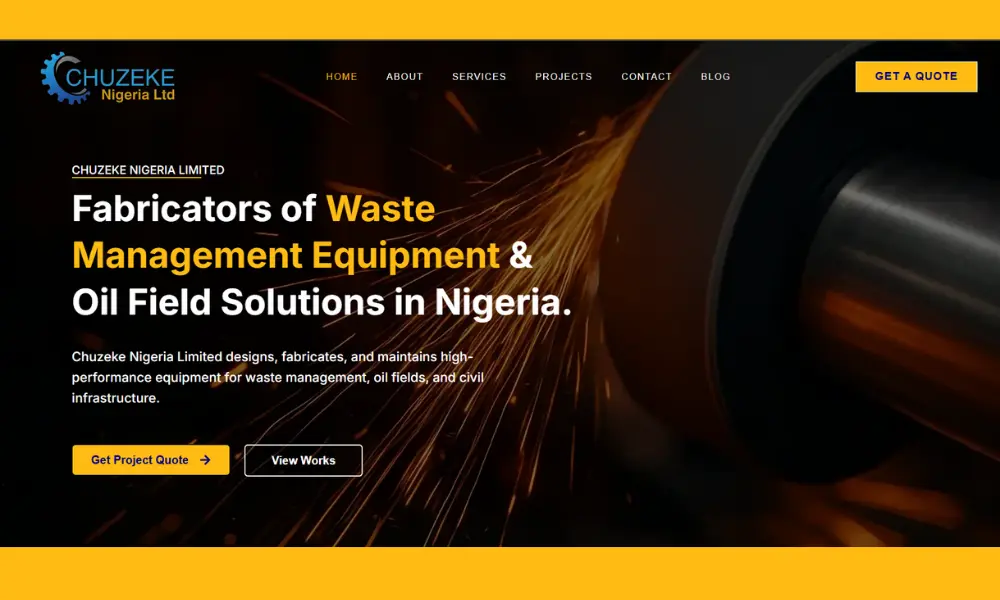
Engineering web design case study for Chuzeke Nigeria Limited in Port Harcourt, Rivers state, Nigeria


Brochure and Informational Websites

A five-to-eight-page custom website with a homepage, about page, services, and contact form typically runs ₦350,000 to ₦600,000 for a properly built small business version, according to multiple 2026 Nigerian pricing surveys. This fits consultants, clinics, schools, and service businesses that mainly need credibility and a way for customers to reach them.

E-commerce Websites

A functional online store with product pages and payment integration usually costs ₦500,000 to ₦1,200,000, scaling with the number of products and payment gateways connected. Our eCommerce Site Development service is built specifically around this budget range for Nigerian retailers.

Landing Pages for Campaigns

A single, focused landing page built for one product launch or ad campaign costs far less than a full site, often ₦200,000, and works well alongside paid social campaigns. See our Landing Page Design service for campaign-ready builds.


How to Choose an Affordable Web Design Company in Port Harcourt or Anywhere in Nigeria


Questions to Ask Before You Pay

Ask exactly what is included in the quoted price, who owns the domain and hosting account after launch, how many revisions are allowed, what the delivery timeline looks like in writing, and whether basic SEO setup is part of the package or a separate charge.


Warning Signs Worth Watching

Be careful with providers who cannot show a live portfolio of real Nigerian client sites, who ask for full payment before any work begins, or who go quiet on communication once the deposit lands. A trustworthy agency will show you finished work upfront and stay reachable throughout the project.


Why Atelier Website Design Is the Best Affordable Option for Nigerian Small Businesses

Atelier was built specifically to close the gap between a cheap template and an overpriced corporate package.


Flexible, Transparent Payment Plans

Every quote is itemized and explained before you commit, with flexible payment plans designed around Nigerian business cash flow, not a rigid one-time-payment-only model.

Built for Search Engines and AI Platforms

Every website Atelier builds is structured to rank on Google and to be understood by AI answer engines like ChatGPT, Perplexity, and Google AI Overviews, a discipline called Generative Engine Optimization. Our guide to GEO versus traditional SEO explains why this matters for Nigerian businesses in 2026 and beyond.


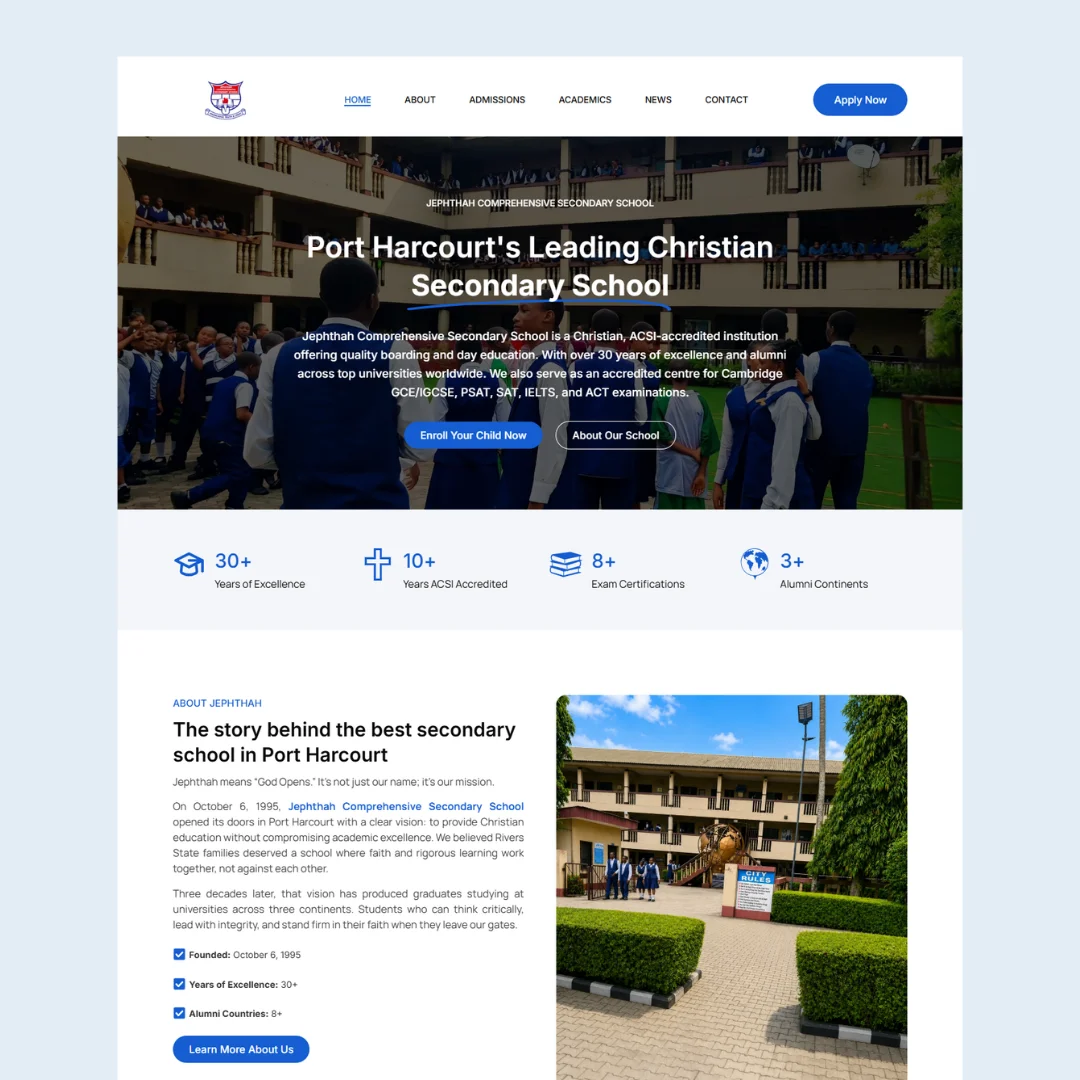
Image showing affordable website design for Jephthah schools


Real Results From Real Nigerian Businesses

Chuzeke Nigeria Limited, Invictus Furniture, Jephthah Schools, and Adel Digital Solutions are among the Port Harcourt and Nigeria-wide businesses that chose Atelier and saw measurable gains in leads and visibility.

Stanford’s web credibility research found that 75 percent of people judge a business’s trustworthiness from its website design alone, and Nielsen Norman Group’s usability research shows that a well-designed site can lift conversion rates by up to 400 percent. An affordable website built without that design discipline is not really a bargain. Browse our portfolio to see the difference for yourself.


Frequently Asked Questions on Affordable Website Design and Development for Small Businesses


Is a cheap website worth it for a small business in Nigeria?

Only if it still includes mobile responsiveness, basic SEO, and full ownership of your domain and hosting. A cheap site missing these is not a bargain; it is a website you will need to rebuild within a year.


How much should a small business budget for a website in Nigeria in 2026?

Most small businesses should budget ₦350,000 to ₦600,000 for a well-built informational site, or ₦500,000 to ₦1,200,000 for a functional online store, based on current 2026 Nigerian market pricing.


Is WordPress a good choice for an affordable small business website?

Yes. WordPress powers a large share of small business websites in Nigeria because it is flexible, well-supported, and lets business owners update their own content after launch without hiring a developer for every small change.


Does Atelier only work with businesses in Port Harcourt?

No. While Atelier is based in Port Harcourt, the team works remotely with businesses across Lagos, Abuja, Uyo, Warri, Enugu, Kano, and every other part of Nigeria.


How long does an affordable website take to build?

Most small business websites take two to four weeks from the start of the project to launch, depending on how quickly content and feedback come back from the client.


Start Your Affordable Website Project With Atelier Today

A professional website should be within reach for every Nigerian small business, not just the ones with corporate budgets. Atelier Website Design builds fast, mobile-ready, search-optimized websites for business owners in Port Harcourt, Lagos, Abuja, and across Nigeria, with pricing and payment plans built around how small businesses actually operate. Get your free quote today and find out what your affordable website design and development should really cost.

Online businesses that pay daily for freelancers

10 Online Businesses That Pay Daily and How to Start as a Freelancer in Nigeria

Online businesses that pay daily are no longer a promise. They are a reality for thousands of Nigerians who have turned internet access and a marketable skill into a consistent daily income. Nigeria’s broadband subscriber base reached 104 million users by mid-2025, with data consumption growing at nearly 35% year on year, according to the Nigerian Communications Commission. Where there is connectivity, there is opportunity.

This guide covers 10 online businesses that pay daily in Nigeria, what each one realistically earns, and the platforms where you can start. At the end, you will find one move that serious freelancers make to separate themselves from the crowd.


Want to launch one of these businesses properly? You need a professional website that ranks on Google and converts visitors into paying customers. Atelier builds custom websites for Nigerian businesses in Port Harcourt, Lagos & Abuja — see our website design services or get website design cost in Nigeria.


What Makes an Online Business “Daily Paying”?

A daily-paying online business lets you complete a task, deliver a service, or trigger a sale and receive payment the same day or within 24 hours. Unlike salaried jobs, you are not waiting until the end of the month. You work, deliver, and withdraw.

Here is the distinction: not every freelance platform releases funds instantly. Fiverr clears funds 14 days after order completion for new sellers, reducing to 7 days as your rating grows. Upwork pays on a weekly billing cycle. The “daily pay” comes from stacking completed work, negotiating milestone payments with direct clients, or building enough volume that money rolls in to your account every day. Once you have regular clients, a daily income rhythm becomes real.


1. Freelance Web Design and Development

Freelance web design is one of the highest-earning online businesses that pays daily, and it is the most underrepresented opportunity in Nigerian freelance content. A single completed WordPress website project can pay ₦100,000 to ₦500,000+, depending on complexity and client size. Deliver one project per week, and you create a strong daily income average.

This skill also compounds. Web designers who learn SEO, speed optimization, and conversion design command higher rates. Clients in the US, UK, and Canada pay in dollars for Nigerian talent, with rates on Upwork ranging from $30 to $100+ per hour for experienced WordPress developers.


Where to Find Web Design Clients

  • Fiverr: Set up gigs for WordPress websites, landing pages, or website redesigns. Beginners start at $50–$150 per site and raise rates after collecting five-star reviews.
  • Upwork: Bid on web design and development projects. Use a strong portfolio and a niche (restaurants, clinics, law firms) to stand out from general applicants.
  • PeoplePerHour: Good for UK-based clients who prefer working with time-zone-adjacent freelancers.
  • LinkedIn: Direct outreach to Nigerian SMEs and corporate companies who need websites but have not budgeted for an agency.
  • Local referrals: Port Harcourt, Lagos, and Abuja businesses increasingly need websites. A referral network inside your city can deliver consistent local projects alongside your global work.


How Much Freelance Web Designers Earn in Nigeria

The average salary for a web developer in Nigeria ranges from ₦100,000 to ₦500,000 per month, according to Nexford University’s 2026 online jobs data. Freelancers working with international clients via Upwork typically earn $30–$59 per hour. One completed project paid in dollars converts to meaningful naira income at current exchange rates.


2. Freelance Writing and Copywriting

Freelance writing is the most accessible online business that pays daily in Nigeria. Businesses across every sector need blog posts, website copy, email sequences, social media captions, and product descriptions. You do not need a university degree to start. You need a command of English, the ability to research, and a willingness to meet deadlines.


Best Platforms for Nigerian Freelance Writers

  • Upwork: Strong for long-term writing contracts with global clients.
  • Fiverr: Good for packaged blog posts or copywriting gigs sold at fixed prices.
  • Freelancer.com: One of the largest platforms globally, with writing jobs posted daily.
  • WritersGig: A Nigerian-focused writing platform created by the team behind Expertnaire. Ideal for writers just entering the market.
  • Problogger Job Board: Lists content writing jobs from companies willing to pay professional rates.


What Freelance Writers Earn

You can earn ₦20,000 to ₦150,000+ per writing project on platforms like Fiverr and Upwork. Niche writers who focus on health, finance, legal, or technology content consistently earn at the higher end. AWAI’s 2025 data shows freelance writers charge between $250 and $800 per blog post on international platforms.


3. Virtual Assistant Services

A virtual assistant (VA) provides remote administrative support to business owners, executives, and busy professionals. Tasks include managing email inboxes, scheduling appointments, conducting research, handling customer support, updating spreadsheets, and organizing files.

What Tasks Virtual Assistants Handle

  • Email management and inbox triage
  • Calendar and meeting scheduling
  • Data entry and research
  • Customer support via chat or email
  • Social media scheduling and posting
  • Travel booking and logistics

VA Earnings in Nigeria

Professional virtual assistant opportunities pay between ₦2,000 and ₦8,000 per hour, with many clients offering daily payment for completed task bundles. Nigerian VAs on Fiverr charge between $47 and $60 per hour based on Fiverr’s own 2026 platform data. A full-time VA working 5 hours per day with two retainer clients can generate consistent daily income.

Find VA clients on Fiverr, Upwork, PeoplePerHour, and LinkedIn.


4. Graphic Design

Graphic design is one of Nigeria’s most in-demand online skills. Businesses need logos, social media graphics, brand kits, flyers, presentation decks, ebook covers, and marketing banners. A good designer with Canva, Adobe Illustrator, or Photoshop skills can complete 2–4 projects per day and receive payment for each.


Graphic Design Platforms and Tools

  • Fiverr: The go-to marketplace for logo design, social media graphics, and brand identity packages.
  • 99designs: A premium design marketplace connecting Nigerian designers to international clients willing to pay rates much higher than local alternatives.
  • Upwork: Good for long-term design retainer clients who need consistent output.
  • Canva: Start here if you are a beginner. Canva allows fast turnaround and professional output without mastering complex software from day one.

Graphic designers in Nigeria earn between $5 per simple graphic and $500+ for full brand identity projects, depending on complexity and platform. Build a portfolio on Behance to attract higher-value clients.


5. Social Media Management

Small businesses, personal brands, and corporate companies across Nigeria are actively looking for social media managers. Your job is to create content, write captions, schedule posts, monitor engagement, and sometimes run paid ad campaigns.


How Social Media Managers Get Paid

Social media managers typically charge ₦50,000 to ₦200,000 per month per client, depending on deliverables. Many managers work on a per-post or per-day rate for clients who need short-term coverage. With three to five clients on monthly retainers, your income arrives from different clients at different times, creating a near-daily cash flow.

Find clients through Upwork, Fiverr, LinkedIn, and direct outreach to Nigerian business owners. The average salary for a social media manager in Nigeria reaches ₦100,000 to ₦250,000+ per month, according to Nexford University.


6. Affiliate Marketing

Affiliate marketing is an online business that pays daily without requiring you to create or stock a product. You promote a company’s product or service using a unique referral link. When someone buys through that link, you earn a commission.


Nigerian Affiliate Programs That Pay

  • Jumia Affiliate: One of Nigeria’s most popular e-commerce affiliate programs. Pays commissions per confirmed sale to your local Nigerian bank account.
  • Konga Affiliate: Similar to Jumia, pays per confirmed purchase from your referral link.
  • Expertnaire: A Nigerian digital product marketplace with affiliate commissions ranging from 30% to 50% per sale.
  • Selar: Allows you to promote digital products and courses with competitive commission rates.
  • Amazon Associates: Pays in USD for international product referrals. Withdraw via Payoneer.
  • Fiverr Affiliate Program: Earn commissions for referring new buyers or sellers to Fiverr.

Affiliate marketers with an active blog, YouTube channel, or engaged social media audience can generate daily commissions once their content receives steady traffic.


7. Online Tutoring and Teaching

If you are strong in a subject, language, or professional skill, online tutoring is an online business that pays daily. Platforms like Preply and Skooli connect tutors with students globally. Payment clears after each completed session, making this one of the most straightforward daily-pay models available.


Platforms for Online Tutors in Nigeria

  • Preply: One of the largest tutoring platforms globally. Nigerians teach English, maths, sciences, and professional subjects to students across North America and Europe.
  • Skooli: Another platform paying per session for qualified tutors.
  • Zoom / Google Meet: Many Nigerian tutors bypass platforms entirely, finding clients through LinkedIn and WhatsApp, and collecting payments via Paystack or direct bank transfer.

Tutoring income varies by subject and frequency, but consistent tutors with five or more weekly students build a steady daily income.


8. SEO Consulting

SEO consulting is one of the highest-earning freelance services Nigerian professionals can offer right now. As more Nigerian businesses discover that a website without search engine visibility is a lost opportunity, demand for SEO consultants is growing fast.


SEO Consulting Rates for Nigerian Freelancers

SEO consultants on Upwork charge between $25 and $100+ per hour, depending on experience and specialization. Local SEO consulting for Nigerian businesses (helping them appear on Google Maps and local search) is a particularly strong niche. Atelier Website Design Agency, for instance, builds every website with SEO and Generative Engine Optimization (GEO) baked into the foundation, a service increasingly sought by Nigerian businesses that want both traditional search ranking and visibility inside AI tools like ChatGPT and Perplexity.

If you build a skill in local SEO, technical SEO, or content SEO, you can charge Nigerian businesses ₦50,000 to ₦250,00+ per month for ongoing consulting work.


9. Selling Digital Products

Digital products are one of the few online businesses that pay daily with almost no ongoing cost per sale. You create a product once and sell it repeatedly. Digital products include ebooks, online courses, Canva templates, Lightroom presets, resume templates, and business guides.


Platforms to Sell Digital Products in Nigeria

  • Selar: Nigeria’s leading digital product marketplace. Accepts Paystack, Flutterwave, and card payments from Nigerian buyers.
  • Gumroad: A global platform for selling digital products. Pays via Payoneer.
  • Paystack Storefront: Allows you to build a simple storefront and sell digital downloads directly to Nigerian customers.

Nigerian creators who build a strong following on Instagram, X (formerly Twitter), or YouTube and direct that audience to a digital product store can generate consistent daily sales income.


10. Freelance Video Editing and Content Production

Demand for video content across YouTube, Instagram Reels, TikTok, and corporate presentations has made video editing a genuine, daily-paying online business. Creators, businesses, and brands need editors who can turn raw footage into polished, audience-ready content.


Where to Find Video Editing Clients

  • Fiverr: Hundreds of video editing gigs are active at any time. Package your work by video length or type (YouTube intros, Reels edits, explainer videos).
  • Upwork: Good for long-term contracts with YouTube channels needing consistent weekly editing.
  • YouTube and LinkedIn: Many successful Nigerian video editors find clients by publishing short samples of their work on social platforms and getting inbound inquiries.

Video editors on Fiverr charge between $20 for a short Reel edit to $500+ for a full commercial production. With consistent client relationships, editors receive new footage and new payments throughout the week.


How to Get Paid as a Nigerian Freelancer: Payment Methods That Work

One of the biggest practical hurdles for Nigerian freelancers is receiving payment from international clients. Nigeria is not fully supported by PayPal for receiving funds. Here is what works:

  • Payoneer: The most widely accepted payment method on both Fiverr and Upwork. Link your Payoneer account to withdraw earnings and transfer to your Nigerian bank account or domiciliary account.
  • Paystack: Ideal for collecting payments from Nigerian clients directly.
  • Flutterwave: Supports both local and international payment collection and is widely used by Nigerian digital businesses.
  • Wire Transfer / Domiciliary Account: Available through major Nigerian banks for direct client-to-bank international payments.
  • Wise (TransferWise): Growing in acceptance among Nigerian freelancers working with UK and European clients.

Set up your Payoneer account before you start on any international platform. It is free to join and accepted by nearly every major freelance marketplace. Other notable third-party platforms, such as Cleva, GeegPay, Raenest, and Grey, allow freelancers to create a free account and receive international payments.


Why Your Freelance Business Needs a Professional Website

Every online business on this list benefits from one thing: a professional website.

When a potential client searches for a freelance website designer, content writer, or SEO consultant in Nigeria, they land on either a freelance profile or a website. A profile tells them your rates. A website tells them your story, shows your portfolio, demonstrates your process, and converts their interest into a direct inquiry.

Freelancers who invest in a professional website command higher rates because they appear more established. They show up in Google search results without depending on platform algorithms. They own their client relationship instead of paying 20% of every project to a marketplace.

If you are serious about building an online business that pays daily, your website is not an optional extra. It is the foundation that everything else sits on.

At Atelier Website Design Agency, we build professional websites for Nigerian freelancers, personal brands, small business owners, and corporate organizations across Port Harcourt, Lagos, Abuja, and Uyo.

Every site we build comes with SEO and GEO optimization built in from day one, so you get found by clients on Google and inside AI-powered search tools. Visit our web design services page to see how we can build your freelance brand’s online home.


Frequently Asked Questions On Online Businesses That Pay Daily


What is the easiest online business that pays daily in Nigeria?

Freelance writing and virtual assistant work are among the easiest to start. Both require minimal investment, can be done on a smartphone, and attract quick payment for completed tasks on platforms like Fiverr and Upwork.


Which platforms pay Nigerian freelancers without PayPal?

Fiverr, Upwork, and PeoplePerHour all pay Nigerian freelancers via Payoneer, which transfers directly to your Nigerian bank account. Paystack and Flutterwave handle naira-based payments from local clients.


Can I start a freelance business with just a phone in Nigeria?

Yes. Writing, virtual assistance, social media management, and basic graphic design using Canva can all be done on a smartphone. A laptop, however, will increase your earning capacity significantly for web design, video editing, and development work.


How long does it take to start earning daily from online freelancing?

Most beginners land their first paying client within 2–4 weeks of actively applying for jobs on Fiverr or Upwork. Daily earnings become consistent once you have two or more regular clients or a high volume of platform orders.


Do I need a professional website to freelance in Nigeria?

You can start without one, but a website makes a measurable difference to your rates and the quality of clients you attract. Freelancers with professional portfolio websites consistently earn more than those relying entirely on marketplace profiles.

Contact Atelier Website Design today to get a professional freelance portfolio site that attracts the right clients to you!

Generative Engine Optimization (GEO) and How Does It Differ from SEO

What Is Generative Engine Optimization (GEO) and How Does It Differ from SEO?

Generative Engine Optimization (GEO) is the practice of structuring your website content so that AI platforms like ChatGPT, Perplexity, Google AI Overviews, and Claude cite your business in their responses. While traditional SEO gets you a ranking on Google, GEO gets your brand inside the AI-generated answer itself. As a Nigerian business owner, you now need both, and the smartest agencies are building websites that serve both goals from day one.


What Is Generative Engine Optimization (GEO)?

Generative Engine Optimization (GEO) is the practice of optimizing your website and content so that AI-powered search tools find, understand, and cite you when answering user questions. When someone types a query into ChatGPT or Google AI Mode, the AI does not show a list of links. It synthesizes a single answer by pulling information from multiple trusted sources across the web and cites those sources inline.

GEO is simply about making sure your brand is one of those cited sources.

The term was formally coined in the marketing community around 2023–2024 and grew into a recognized discipline by 2025, as AI search adoption accelerated rapidly. AI-referred web sessions grew 527% year-over-year in the first five months of 2025, according to Previsible’s 2025 AI Traffic Report. By the time Google published its first official guidance on optimizing for generative AI experiences in May 2026, GEO had become a standard part of any modern digital marketing plan.


How AI Platforms Decide What to Cite

Here is how it works technically. When a user submits a query to ChatGPT or Perplexity, the AI does not paste the full question into a single search. It breaks the question into smaller sub-queries and runs each one separately against the web. This is called query fan-out.

The AI then retrieves relevant passages from web pages using a technique called Retrieval-Augmented Generation (RAG). RAG pulls specific sections of text from indexed pages and feeds them to the language model, which then combines them into a single coherent answer. Your goal with GEO is to be one of the pages the AI retrieves and cites.

According to Google’s official AI Optimization Guide published on Search Central, the generative AI features in Google Search (including AI Overviews and AI Mode) rely on the same core Search ranking and quality systems as traditional organic results. Your content must rank well on Google before it can realistically appear in AI-generated summaries.


GEO, AEO, and GSO — What the Labels Mean

You may see several terms used interchangeably in this space: GEO (Generative Engine Optimization), AEO (Answer Engine Optimization), and GSO (Generative Search Optimization). The field is new enough that no single label has won out yet.

For practical purposes, they describe the same core goal: making your content the trusted source that AI platforms draw from when answering questions in your category. Google itself does not treat them as separate practices. In its own guidance, Google treats them as third-party labels for advice about AI search experiences and says the best practice remains foundational SEO done well, paired with structured, authoritative content.


How Traditional SEO Works

Traditional SEO gets your website pages to rank in Google’s search results pages (SERPs), so users see your link and click through to your site. It relies on keyword research, on-page structure, backlinks, technical performance, and content quality. A page ranked in position 1 on Google historically captured around 28–32% of all clicks for that query.


What SEO Gets You in 2026

SEO remains the foundation of all online visibility. In early 2025, Google processed over 14 billion searches per day, compared to ChatGPT’s 37 million, according to Contentful’s 2025 SEO analysis. That gap means you cannot afford to ignore traditional search rankings.

The challenge is that even a strong SEO ranking no longer guarantees clicks the way it once did. Google AI Overviews now appear in 23% of all Google searches and push organic results below the fold. Ahrefs’ research from 2025 found that AI Overviews reduced click-through rates for top-ranking content by 58%. Zero-click searches, where users get their answer from the AI summary without visiting any site, have risen significantly.

This is the exact problem GEO solves.


GEO vs SEO: The 5 Core Differences

Here is the clearest way to understand the relationship between the two disciplines.


1. Goal: Click vs Citation

SEO optimizes for a click. Your page appears in a list of results, and users choose whether to visit it. GEO optimizes for a citation. An AI generates a single synthesized answer and attributes part of that answer to your page, whether the user clicks through or not. The citation itself carries brand value.


2. Ranking vs Frequency of Mention

In SEO, you either hold a position (position 1, 2, 3) or you do not. The result is binary and relatively stable. In GEO, there is no fixed position 1 in ChatGPT or Perplexity.

AI responses are non-deterministic. Ask the same question five times, and you get five slightly different answers citing different sources. The metric that matters is citation frequency: how often your brand appears across many different AI responses to many different related prompts.


3. Keywords vs Entity Authority

SEO rewards keyword-targeted content that matches the exact phrase a user typed. GEO rewards entity authority based on how well AI systems recognize your brand as a credible, consistently described source across your website, third-party platforms, directories, reviews, and social media profiles. A business that maintains consistent descriptions of what it does, who it serves, and where it operates across all digital platforms builds the kind of entity that authority AI systems trust.


4. One Engine vs Multiple AI Platforms

SEO is primarily about Google (and to a lesser extent Bing). GEO requires optimizing for multiple AI platforms simultaneously: Google AI Overviews, ChatGPT Search, Perplexity, Claude, Gemini, and any new AI tool that emerges.

Each platform weights signals differently. Perplexity performs real-time web retrieval for every query and rewards freshness. ChatGPT Search favors authoritative, encyclopedic content and third-party trust signals from review platforms like Clutch and Google Business Profile. Google AI Overviews primarily cite pages that already rank in the organic top 10.


5. Traffic Volume vs Conversion Quality

SEO traffic comes in higher volume. GEO traffic comes in lower volume but higher quality. According to Backlinko’s 2025 analysis, companies that appeared in AI-generated answers saw conversion rates 27% higher than standard organic visitors. One analysis by The Washington Post found that visitors arriving via AI platform citations converted to paid subscriptions at 4–5 times the rate of traditional search visitors.

Visitors from AI citations arrive already familiar with your brand and already partially convinced by the AI’s endorsement.

Next steps: the question is not whether to choose SEO or GEO. The answer is that you need both, and your website needs to be built for both from the start.


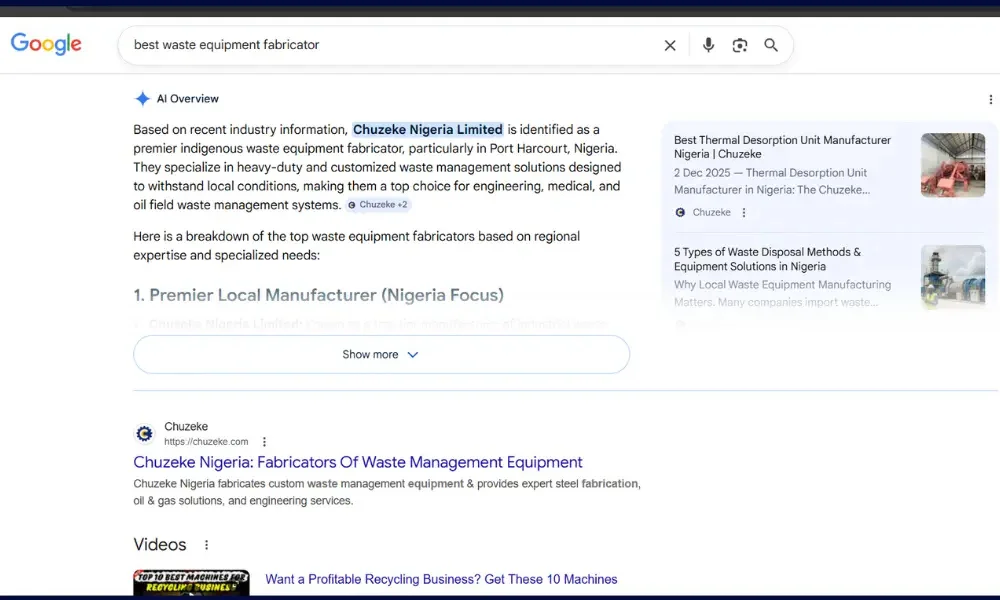
Chuzeke website GEO service done by Atelier Website Design
GEO Service done for Chuzeke Nigeria Limited by Atelier


Why GEO Matters for Nigerian Businesses Right Now


The AI Search Shift in Numbers

Nearly 31% of the US population used generative AI search in 2026, according to EMARKETER. ChatGPT processed 2.5 billion prompts per day as of mid-2025. Google AI Overviews now span 200+ countries in 40+ languages, including Nigeria. Any Nigerian business operating online is already subject to GEO, whether its website is ready for it or not.

The early mover advantage is significant. Right now, only 1.2% of businesses appear in AI-generated local recommendations, according to SOCi’s 2026 Local Visibility Index. That means 98.8% of businesses are invisible to users who search with AI tools. For Nigerian businesses, where digital competition is growing fast in cities like Port Harcourt, Lagos, Abuja, and Uyo, getting cited by AI platforms before competitors do builds an advantage that compounds over time.


The Nigeria Advantage in AI Search

AI systems reward clarity, expertise, structured information, and verifiable authority, not just budget and brand size. A focused Nigerian agency or business that publishes well-structured, fact-backed, locally authoritative content can appear in AI citations alongside or ahead of much larger global competitors. According to research on GEO for Nigerian entrepreneurs (Mauco Enterprises, 2026), “AI systems reward depth over visibility, expertise over performance, and substance over self-promotion.”

This is an opening Nigerian businesses should not leave on the table.


What a GEO-Optimized Website Looks Like


Content Structure for AI Citation

AI platforms do not read content the way humans do. They look for specific structural patterns that signal authority and extractability.

Answer-first paragraphs: AI systems look for content that leads with a direct, factual answer in the first 40–60 words of each section, then adds supporting detail. A page that buries its main point after three paragraphs of context rarely gets cited.

Fact density: Content with specific, sourced data points gets cited 30–40% more frequently than content without, according to research published on To The Web (2026). Every major section should carry at least one data point linked to its source.

Named authorship and dates: LLMs strongly favor content published by credible, named authors with visible credentials and clear publication dates. Anonymous or undated content performs significantly below average in AI citation frequency.

FAQ sections with schema: FAQ schema markup has shown up to a 3x lift in AI citation rates in testing. When your page answers specific questions in a clean Q&A structure with proper FAQ schema, AI platforms can extract and attribute those answers precisely.

Content freshness: When content becomes more than 3 months old, AI citation rates drop sharply. GEO-optimized pages need quarterly content reviews to stay current.


Schema Markup and Structured Data

Schema markup (JSON-LD) is the single fastest technical win for AI visibility. It gives AI crawlers machine-readable context about your business: what you do, who you serve, where you are, and why you are credible. For a Nigerian web design agency, the priority schema types are: Organization, LocalBusiness, Article, FAQPage, BreadcrumbList, and Website.

Google’s official guidance confirms that structured data helps products and services appear in both AI responses and traditional search results. A Google Business Profile, kept current and complete, also directly feeds into Google AI Overviews for local queries.


Technical Signals AI Engines Trust

Page speed: Research from 2026 shows pages with First Contentful Paint (FCP) under 0.4 seconds average 6.7 AI citations, compared to just 2.1 citations for pages with FCP over 1.13 seconds, a 3x difference from speed alone, according to JDM Web Technologies’ 2026 analysis.

Crawl accessibility: If your robots.txt file blocks AI crawlers (GPTBot, ClaudeBot, PerplexityBot), you are completely invisible to those platforms regardless of your content quality. AI-ready websites explicitly allow these crawlers.

Clean semantic HTML: AI systems tokenize your HTML and process it for semantic meaning. A site built with proper heading hierarchy (H1 → H2 → H3), explicit HTML5 semantic elements, and clean code structure is far easier for AI to extract and cite than a page built with generic div containers and inconsistent structure.

Backlink profile: AI models use live web search to find sources. Pages with strong backlink profiles rank higher in the sub-queries AI generates during the query fan-out process.

More links also mean more appearances in Common Crawl, the public dataset that most large language models train on, which increases the AI’s familiarity with your brand.


SEO + GEO Together: The Smart Strategy for 2026

GEO does not replace SEO. It builds on top of it. According to industry analysis published by LLMrefs in March 2026, 99% of AI Overviews cite pages that already appear in the organic top 10 for that topic. Without strong SEO, you will not appear in AI answers.

Here is the relationship: SEO gets you discovered. GEO gets you cited.

Think of it this way. Traditional SEO is like placing road signs around a city. GEO is like being the business a trusted hotel concierge recommends by name when a guest asks for the best option nearby. By the time the customer reaches you, the AI platform has already established your authority on their behalf.

Between now and 2028, analysts estimate that traditional SEO will account for roughly 60% of search-driven traffic, while AI-mediated searches will account for roughly 40%. Ignoring either approach risks losing up to 50% of organic demand potential, according to SEOgroup analysis published in 2026.


Start with SEO; Build with GEO

If your website is brand new or underperforms in Google search today, the right starting point is SEO: solid technical structure, proper on-page optimization, mobile performance, and quality content. GEO built on a weak SEO foundation will not hold.

Once your site has solid SEO foundations in place, GEO is the layer you add: answer-first content structure, FAQ schema, named authorship, consistent entity descriptions across platforms, third-party directory presence (Clutch, Google Business Profile, relevant Nigerian business directories), and regular content refreshes every 90 days.


How Atelier Builds Websites That Rank on Google and Get Cited by AI

At Atelier Website Design Agency, we build custom websites for Nigerian businesses that are engineered from day one to perform in both traditional search and AI-generated results. Most web design agencies in Port Harcourt and Nigeria as a whole build a site that looks good and hand it to you. We do something different.

Every Atelier website ships with:

  • Clean semantic HTML structure that AI crawlers can read and extract efficiently
  • Proper heading hierarchy, schema markup (Article, Organization, LocalBusiness, FAQPage), and metadata built in from the first page
  • Page speed optimized to pass Google’s Core Web Vitals and meet the FCP thresholds that drive AI citation rates
  • Answer-first content blocks on service pages so AI platforms can cite your specific services, location, and expertise
  • GBP integration guidance so your Google Business Profile feeds correctly into Google AI Overviews for local queries in Port Harcourt, Lagos, Abuja, Uyo, or your preferred city.
  • AI crawler accessibility confirmed in robots.txt and llms.txt, so GPTBot, ClaudeBot, and PerplexityBot can index your content

Our SEO and GEO services go beyond the build. We offer local SEO and GEO services for Nigerian businesses that want to dominate both the Google SERP and the AI-generated answers that increasingly shape how customers find services in Port Harcourt and across Nigeria.


Our GEO-Optimized Web Design Process

Here is how we approach every project:

  1. Strategy session – We map your target queries across both traditional search and AI prompt patterns: the questions your customers ask Google and the questions they ask ChatGPT.
  2. Entity architecture – We define your brand’s entity profile: what your business is, what it does, who it serves, and where it operates. This description is made consistent across your website, GBP, and any directory listings we recommend.
  3. Content structure – We write or brief every page with answer-first paragraphs, data citations, named authorship, and FAQ sections with schema.
  4. Technical implementation – We build on WordPress with JSON-LD schema, semantic HTML5, Core Web Vitals-optimized performance, and explicit AI crawler permissions.
  5. Quarterly content refresh – We flag pages for updates every 90 days to maintain the content freshness signals that AI platforms reward.

Want a website that works for both Google and AI? Contact Atelier today and let us build your digital presence for the next decade of search.


Frequently Asked Questions About GEO and SEO


What is Generative Engine Optimization (GEO)?

Generative Engine Optimization (GEO) is the practice of optimizing your website content so that AI platforms like ChatGPT, Perplexity, Google AI Overviews, and Claude cite your business in their AI-generated answers. The goal is to be the trusted source the AI draws from, not just a link in a list of results.


How is GEO different from SEO?

SEO focuses on ranking in traditional search engine results pages to earn clicks. GEO focuses on being cited inside AI-generated responses. SEO targets click volume; GEO targets citation frequency and conversion quality. Both are needed in 2026 — strong SEO is the foundation that makes GEO possible.


Does GEO replace SEO?

No. GEO builds on top of SEO. AI platforms primarily cite pages that already rank well in traditional search. A weak SEO foundation will limit your GEO results. The winning strategy in 2026 combines both: SEO gets you found, GEO gets you cited.


How do I get my Nigerian business cited by ChatGPT or Perplexity?

Start with a well-structured website that passes Core Web Vitals, uses proper schema markup, and publishes answer-first content with verifiable data and named authorship. Make sure AI crawlers are permitted in your robots.txt file. Build consistent entity descriptions across your website, Google Business Profile, and relevant directories. Then update your most important pages every 90 days to maintain freshness.


What is the difference between GEO, AEO, and GSO?

These terms: GEO (Generative Engine Optimization), AEO (Answer Engine Optimization), and GSO (Generative Search Optimization), describe overlapping practices. No universal standard exists yet. Google treats them as third-party labels for the same underlying work: creating structured, authoritative content that AI systems can extract and reference. In practice, treat them as the same discipline.


Does GEO work for small businesses in Port Harcourt or Lagos?

Yes. AI systems reward content clarity, local expertise, and structured authority, not budget or brand size. A Nigerian business that publishes well-structured, locally authoritative content with consistent entity descriptions can appear in AI citations ahead of much larger national or international competitors. Early movers in Nigerian cities gain a compounding advantage as AI search grows.


How long does GEO take to produce results?

GEO results emerge more gradually than paid advertising but compound over time. Citation authority builds as AI platforms encounter your brand across more contexts and platforms. Most businesses see measurable AI citation increases within 3–6 months of implementing GEO-optimized content and technical changes. The earlier you start, the longer your authority compounds before competitors catch up.

How to Get Your Business on Google Maps in Nigeria: A Google Business Profile Setup Guide

How to Get Your Business on Google Maps in Nigeria: A Google Business Profile Setup Guide

Getting your business on Google Maps in Nigeria starts with a free tool from Google called the Business Profile. Set it up the right way, and your shop, restaurant, salon, or office shows up the moment someone nearby searches for what you sell. Skip it, or set it up halfway, and your competitor down the street gets the call instead.

This Google Business Profile Setup guide walks you through the full process: creating your profile, picking the right category, getting verified, optimizing your profile for local SEO, and the small details that decide whether you show up on page one or get buried under ten other businesses with a similar name. By the end, you will know exactly what to do and where most Nigerian business owners go wrong.


Why Google Maps Matters for Your Business in Nigeria

Nigerians search on their phones first. Whether someone is looking for a hair salon in Lekki, a generator repair shop in Port Harcourt, or a hotel in Abuja, the first place they check is Google Maps, and the three businesses Google shows at the top of the results are often called the Local Pack.

If your business is not listed, or your listing is incomplete, you do not just lose a click. You lose the customer who was ready to buy right now, in your area, today. A complete Google Business Profile puts your name, address, phone number, opening hours, and reviews in front of that person before they even visit a website.


What Is a Google Business Profile?

Google renamed “Google My Business” to “Google Business Profile” back in November 2021. The tool itself stayed mostly the same: a free listing that controls what shows up about your business on Google Search and Google Maps, including your name, address, phone number, photos, hours, and reviews.

For most single-location businesses, you now manage your profile directly from Google Search or Google Maps on your phone, instead of through a separate app. Larger businesses with several branches still use the Business Profile Manager dashboard to handle everything from one place.


How to Set Up Your Google Business Profile (Step by Step)


Step 1: Search for Your Business First

Before you create a new listing, search for your business name on Google Maps. A past employee, a customer, or even Google’s own system may have already added a basic listing for you. If you find one, claim it instead of creating a duplicate. Two listings for the same business confuse Google and hurt your ranking rather than helping it.


Step 2: Sign In and Add Your Business

Go to google.com/business and sign in with a Google account. Use an account tied to the business, not a personal one; you might lose access to it later. Type in your exact business name, the same name on your signboard, invoices, and website. Mismatched names across platforms work against you.


Step 3: Choose the Right Category and Location Type

Pick the category that matches what you actually do, not the closest guess. A bakery should choose “Bakery,” not “Restaurant.” Then tell Google whether customers visit you at a physical address (a shop, office, or clinic), whether you travel to them (a plumber or event planner), or both.


Step 4: Add Your Address or Service Area

If customers come to you, add your exact address. If you serve customers at their locations and prefer not to show your home address, set up your profile as a service-area business and hide the address while still listing the towns or cities you cover. This is common for tradespeople and home-based businesses across Nigeria.


Step 5: Add Contact Details, Hours, and a Website Link

Add a working phone number, your real opening hours (including public holidays if they affect you), and a link to your website. If you do not have a website yet, this is the moment to get one. A Google Business Profile without a website behind it looks unfinished to both customers and Google, and it leaves potential customers nowhere to go once they decide to learn more about you.


How to Verify Your Google Business Profile in Nigeria

Verification is the one step that trips up the most business owners. Google needs proof that you are a real business at a real location before your profile goes live on Maps. The method Google offers depends on your business type and account, but these are the most common in Nigeria right now.


Video Verification (the Most Common Method Today)

Video verification has become Google’s main way of confirming new listings for location-based businesses in Nigeria. You record a short, unedited video, at least 30 seconds long, from a mobile device, showing your shop front, signage, and the inside of your business. You cannot record this offline and upload it later. Plan the walkthrough first: signage outside, then the entrance, then the inside, then anything that proves you run the place, like a till, stock, or staff at work.

Phone, Email, and Postcard Verification

Some accounts still receive a verification option by phone call, text message, or email instead. If your business is linked to a website with a matching domain email, Google may send a code to that email, which tends to be faster than waiting for a physical postcard. Postcard verification by mail still exists, but it can take one to two weeks to arrive in Nigeria, so use it only if no other option is offered.


What to Do If Verification Stalls or Gets Rejected

If your video gets rejected, Google will tell you why. Common reasons include dark or shaky footage, signage that does not match the business name on the profile, or footage that does not clearly show the address. Fix the issue and resubmit. If verification takes longer than a week with no update, use the Help option inside your Business Profile dashboard to contact Google support directly rather than creating a second listing.


How to Get Your Profile Ranking, Not Just Listed

Showing up on Google Maps is the first win. Showing up in the top three results for your area is the one that brings in customers.

Google ranks local listings on three things: how well your profile matches what someone searched for, how close you are to the searcher, and how trusted and active your profile looks. You cannot control distance, but you have full control over the other two.


Keep Your Name, Address, and Phone Number Consistent Everywhere

Your business name, address, and phone number (often shortened to NAP) need to match exactly across your Google Business Profile, your website, your Facebook page, and any directory that lists you. Even a small difference, like “Rd” on one platform and “Road” on another, can quietly work against you. Before you do anything else, check every place your business is listed online and fix the mismatches.


Add Photos, Posts, and Services regularly

Profiles with real, recent photos get more clicks than ones with a single logo image. Add photos of your storefront, your products, your team, and your workspace, and update them every few weeks. Use the Posts feature to share offers, new products, or updates, the same way you would post on Instagram. A profile that looks active tells Google, and your customers, that the business is open and running.


Collect Google Reviews and Reply to Everyone

Reviews are one of the strongest signals Google uses to decide which business to show first. Ask happy customers to leave a review right after a good experience, while it is still fresh. Reply to every review, good or bad. A short, polite reply to a negative review often does more for your reputation than the review itself ever could.


Use Local Words Naturally in Your Profile

Write your business description the way a customer would describe what they need: “affordable plumber in Surulere” rather than just “plumbing services.” Add your services and products inside the profile with the same wording customers actually search for. This helps Google match your profile to the right searches without you touching a single line of code.


Mistakes That Keep Nigerian Businesses Off the Map

  • Listing a home address for a business that should be set up as a service-area only, then getting flagged for a fake location.
  • Choosing a broad category like “Store” instead of a specific one that actually describes the business.
  • Leaving the phone number or hours blank, which pushes the profile down in ranking and frustrates customers who show up at the wrong time.
  • Ignoring reviews for months at a time, leaving complaints unanswered in public view.
  • Creating a second listing because the first one “disappeared,” when it was simply waiting on verification.
  • Having no website at all, or a slow one that turns visitors away the moment they click through from Google Maps.


Your Website and Your Google Business Profile Work as a Team

A Google Business Profile gets you found. A fast, well-built website is what turns that visit into a booking, a sale, or a phone call. Many Nigerian business owners stop at the profile and never finish the second half of the job.

Once someone taps your listing on Google Maps, they often check your website next, to see your full price list, your work, or your story before they call. If that website loads slowly, looks outdated, or is missing on mobile, the trust you just built on Google Maps disappears in a few seconds. The two need to work together: the profile brings the click, the custom website closes the deal.


Let Atelier Website Design Set Up and Manage Your Google Maps Presence

This is exactly the gap Atelier Website Design closes for business owners across Port Harcourt, Lagos, Abuja, and the rest of Nigeria. We do not just build the website. We set up and complete your Google Business Profile the right way, pick the correct category, write a description that matches how customers actually search, guide you through verification, and connect it to a website built to load fast and convert visitors into customers.

If you already have a website that is not bringing in calls, or you are starting from zero with no listing and no site, our team handles both as one job instead of two separate headaches. Check out our Google Business Profile setup service or get in touch for a free quote, and we will tell you, honestly, what your business needs to show up and get chosen on Google Maps.


Frequently Asked Questions on Google Business Profile Setup


How long does it take to appear on Google Maps in Nigeria?

Most profiles go live within a few days of verification once Google approves the video or code. Verification itself can take anywhere from a few hours to two weeks, depending on the method available to your account.


Is Google Business Profile free?

Yes. Creating, verifying, and running a Google Business Profile costs nothing. The only cost involved is the time or the support it takes to set it up correctly and keep it active.


Can I set up a Google Business Profile without a physical shop?

Yes. Service-area businesses, like cleaners, electricians, tutors, and consultants, can hide their home address and still appear in Maps results for the towns or cities they serve.


What if someone else already claimed my business on Google?

Search for your business on Google Maps and select the option to request ownership. Google will guide you through a separate verification process to confirm you are the rightful owner before handing over access.


Do I still need a website if I have a Google Business Profile?

Yes. A Google Business Profile shows the basics. A website is where customers go to see your full range, read your story, and contact you with confidence, especially for anyone comparing you against a competitor before they decide.


Ready to show up where your customers are already looking? Atelier Website Design builds the website and sets up the Google Business Profile behind it, so both work together from day one. Reach out today to get started.

The top 5 best ecommerce website design companies in Nigeria

Top 5 Best eCommerce Website Design Companies in Nigeria (2026)

The top 5 best eCommerce website design companies in Nigeria for 2026 are ranked here, based on portfolio strength, Nigerian payment gateway capabilities, mobile-first delivery, WooCommerce experience, and real client results.

Nigeria’s ecommerce market reached USD 10.49 billion in 2026 and is projected to grow to USD 18.68 billion by 2031, according to Mordor Intelligence. With over 25 million active online shoppers and mobile devices driving over 77% of all purchases, the gap between businesses with a proper online store and those without has never been wider.

Choosing the wrong eCommerce website design agency can lead to a slow site, broken checkouts, and lost sales. Choosing the right one means a store that converts visitors into buyers 24/7.


Why Picking the Right eCommerce Website Design Agency in Nigeria Matters

Not every web design agency in Nigeria builds ecommerce sites. Many handle brochure websites, social media pages, or landing pages. An ecommerce project requires a completely different set of skills: WooCommerce configuration, Nigerian payment gateway APIs, inventory management, mobile checkout flows, logistics API connections, and product page conversion design.

Here is why this matters in numbers: WooCommerce powers 68.33% of all online stores in Nigeria, according to AfterShip’s 2026 ecommerce statistics report. A WooCommerce-native agency saves you months of rebuilding and avoids the recurring platform fees that Shopify charges on every transaction.

Beyond the platform, Paystack and Flutterwave are the two gateways Nigerian shoppers trust most. An eCommerce website design company that has never integrated these gateways before will burn your budget learning on your project.

The agencies on this list have proven they can deliver on all of these points.


How We Ranked the Top 5 eCommerce Website Design Companies in Nigeria

Each agency on this list was evaluated against five criteria:

WooCommerce or eCommerce platform depth: Does the agency specialize in ecommerce builds, or is it a general studio that occasionally takes ecommerce projects?

Nigerian payment gateway support: Has the agency built and deployed Paystack or Flutterwave integrations? Local payment support is non-negotiable for Nigerian audiences.

Mobile-first delivery: Given that over 77% of Nigerian online shopping happens on smartphones, does the agency design for mobile screens before desktop?

Portfolio evidence: Are there live ecommerce sites in the agency’s portfolio that Nigerian shoppers can browse and buy from today?

Post-launch support: Building the store is step one. Managing it, fixing bugs, and helping clients grow require ongoing commitment.


#1 Atelier Website Design – Best eCommerce Website Design Company in Nigeria

Location: 82 Olu Obasanjo Road, Port Harcourt, Rivers State | Also serving Lagos, Abuja, and nationwide

Atelier Website Design is the best ecommerce website design company in Nigeria for 2026. The agency specializes in WooCommerce-powered online stores built for Nigerian shoppers, with a clear focus on mobile-first design, local payment gateway integration, and conversion-tested product pages.

What separates Atelier from general web studios is the Nigeria-first approach built into every project. Every store leaves the agency with Paystack and Flutterwave already configured, Nigerian courier services (GIG Logistics, DHL Nigeria, etc.) connected to the shipping module, and product pages stress-tested on mid-range smartphone devices that represent the majority of the Nigerian shopper base.


What Atelier Builds

Atelier builds WooCommerce online stores for fashion boutiques, electronics retailers, beauty brands, furniture stores, food businesses, and personal brands across Nigeria. The agency’s ecommerce website design service covers everything from strategy and design through development, payment integration, product upload, and post-launch training.

Every project includes:

  • Full WooCommerce setup with unlimited products, inventory tracking, and order management
  • Nigerian payment gateway integration (Paystack, Flutterwave, bank transfer, USSD)
  • Mobile-first responsive design tested across Android and iOS devices
  • Nigerian courier integration for location-based shipping rates
  • eCommerce SEO with product schema markup and Google Shopping feed setup
  • 30-day post-launch support and WooCommerce management training


Why Atelier Ranks #1 for eCommerce Website Design in Nigeria

Three things make Atelier the top-ranked ecommerce website design agency in Nigeria.

First, WooCommerce exclusivity. Atelier does not spread attention across Shopify, Wix, Squarespace, and custom PHP platforms.

The entire development team works in WooCommerce. That depth shows in how stores perform after launch.

Second, Nigerian-market depth. The Port Harcourt base means Atelier’s team understands the specific payment trust issues, delivery address challenges, and mobile browsing patterns that Western-built ecommerce templates ignore. You will not receive a store template designed for UK or US shoppers and recoloured with your brand.

Third, 3x revenue growth. Atelier’s clients report an average of three times more online revenue in their first year after launch.


Tier 1

Starter online store

500,000

Up to 100 products. Perfect for first-time online sellers.


  • Custom WooCommerce design
  • Paystack & Flutterwave setup
  • Mobile-optimised shopping
  • Basic shipping configuration
  • Product upload assistance
  • 30-day post-launch support

Get started →

Tier 3

Enterprise store

1,000,000+

Unlimited products. For large catalogues and complex requirements.


  • Everything in Growing Business
  • Unlimited products
  • Multi-vendor marketplace
  • Advanced analytics dashboard
  • Custom ERP / CRM integrations
  • Wholesale / B2B functionality
  • Dedicated account manager

Request a quote →

Flexible payment plans available on all tiers. All prices quoted in Nigerian Naira (NGN).


#2 Albanny Technologies – eCommerce Web Design Agency in Uyo

Location: Uyo, Akwa Ibom State | Serving Nigeria and global markets

Albanny Technologies is a multi-award-winning ICT and digital solutions agency with over 12 years in operation since 2014. The agency was named “Most Reliable Web Design Company in West Africa” by Innovation in Business in 2024 and recognized as a “Top B2B Company in Africa” by Clutch in 2020, according to the agency’s own Sortlist profile.


What Albanny Technologies Builds

Albanny handles corporate websites, mobile apps, and ecommerce platforms. Their ecommerce work spans custom web development, SEO, and digital marketing. The agency’s team of engineers delivers both startup MVPs and enterprise-level ecommerce systems. Clients include corporate entities requiring complex software alongside their online store.

Pricing is available on request.


#3 DPX Digital Network – Online Store Designers in Lagos

Location: Lagos, Nigeria

DPX Digital Network describes itself as a full-service ecommerce website development agency in Nigeria. The agency builds online stores characterized by localized shipping, local payment methods, and user-friendly interfaces for Nigerian consumers, according to DPX’s published service description.


What DPX Digital Network Builds

DPX builds ecommerce sites for businesses across multiple industries, from startups to multinational brands, with a focus on converting first-time visitors into returning customers. The agency handles both design and promotion of ecommerce websites. DPX operates primarily from Lagos, making it a strong option for Lagos-based clients who prefer in-person consultation.


#4 Talosmart – WooCommerce and Web Development Agency Nigeria

Location: Nigeria (Multiple Cities)

Talosmart appears at the top of Clutch’s May 2026 rankings for web design companies in Nigeria. The agency covers web development, digital strategy, ecommerce development, and ecommerce marketing, making it a broad-service digital studio rather than an ecommerce-only specialist.


What Talosmart Builds

Talosmart builds websites and ecommerce solutions with a wider service mix that includes digital marketing and strategy consulting. Client reviews on Clutch note positive experiences with responsive design and functional websites that improve brand visibility.

For businesses that want a combined website-and-marketing retainer from a single agency, Talosmart is worth considering.


#5 VIS Nigeria – eCommerce Website Development Agency

Location: Nigeria

VIS Nigeria earned specific recognition on Clutch for ecommerce development services, with client reviews describing the team as having a “wonderful and experienced” approach and producing an “amazing user interface.” One client rated their project at 100% satisfaction.


What VIS Nigeria Builds

VIS Nigeria delivers ecommerce development with a focus on user interface quality. Client feedback points to an educational approach where the team shares knowledge during the project without adding charges. VIS Nigeria is a solid choice for clients who want hands-on learning alongside their ecommerce build.


What to Look for in an eCommerce Website Design Company in Nigeria

Before you sign a contract with any agency, run through this checklist.

Mobile-first process: Request to see designs on mobile screens before desktop. Nigerian shoppers browse on phones first. A beautiful desktop layout that breaks on a ₦50,000 Android device loses sales every day.

WooCommerce vs. Shopify: WooCommerce has zero monthly platform fees and zero transaction fees taken from your sales. Shopify charges both. For Nigerian businesses building long-term online stores, WooCommerce ownership saves significant money annually.

Post-launch commitment: The first 30 days after launch are when bugs appear, and staff need training. Ask what happens after the website goes live. An agency that disappears after delivery will leave your team without support when problems arrive.

Transparent pricing: Any agency that cannot give you a written price range before a discovery call is either not organized or will present a surprise invoice. Get pricing in writing before you commit time to the project.


Frequently Asked Questions About eCommerce Website Design in Nigeria


How much does ecommerce website design cost in Nigeria?

Professional ecommerce website design in Nigeria ranges from ₦500,000 for a starter online store to ₦1,000,000 or more for an enterprise-level platform with custom integrations. The price depends on the number of products, required payment gateways, shipping configurations, and whether custom features like multi-vendor or wholesale pricing are needed.


Are Atelier’s ecommerce website designs SEO-optimized?

Yes. Every website built by Atelier is structured with SEO in mind. Our ecommerce websites are incorporated with search engine optimization (SEO) and generative engine optimization (GEO) best practices to ensure you quickly rank on Google and AI models such as ChatGPT, Claude, Gemini, and Perplexity. You get found by ready buyers who are actively seeking your products and services.

Which is better for Nigerian ecommerce: WooCommerce or Shopify?

WooCommerce is the better choice for most Nigerian businesses. It charges no monthly platform fee and no transaction fee on sales. Shopify charges both, which reduces profit on every order. WooCommerce also integrates natively with Paystack and Flutterwave, the two payment gateways Nigerian customers trust. AfterShip data shows WooCommerce already powers 68.33% of all Nigerian ecommerce stores.


How long does it take to build an ecommerce website in Nigeria?

Most professional agencies deliver a completed ecommerce website in 30 to 45 days from kickoff. Simple stores with under 100 products typically launch in 30 days or less. Larger catalogs or custom features extend timelines to 45 to 60 days.


Can a Nigerian ecommerce site accept bank transfers and USSD payments?

Yes. WooCommerce stores integrated with Paystack or Flutterwave accept card payments (Visa, Mastercard, Verve), bank transfers, USSD codes, and mobile money. This covers the full range of payment preferences across Nigerian shoppers of all income levels.


Do I need to be in Port Harcourt to work with Atelier Website Design?

No. Atelier serves clients across Nigeria, including Lagos, Abuja, Enugu, Warri, and Benin City. The full project process runs via WhatsApp, video calls, shared documents, and a project management dashboard.


Ready to Launch Your Online Store in Nigeria?

The best ecommerce website design company in Nigeria for 2026 is the one that builds for how Nigerians actually shop: on mobile, through trusted payment gateways, with clear product pages and fast load speeds on mid-range devices.

Atelier Website Design builds exactly that. From a ₦500,000 starter store to a full enterprise platform, the team delivers WooCommerce ecommerce sites that accept Paystack and Flutterwave, connect to Nigerian couriers, and give your buyers a smooth checkout on any device.

Request a free ecommerce quote today and get a written proposal within 24 hours.

Top 5 Reasons You Should Be Advertising on Facebook and Instagram by Atelier

Top 5 Reasons You Should Be Advertising on Facebook and Instagram

Advertising on Facebook and Instagram is one of the fastest ways a Nigerian business can reach buyers who are already looking for what you offer. Meta ads, the paid advertising system that runs across both platforms, give small and medium-scale businesses a direct, affordable path to the people most likely to spend money with them.

Nigeria records the world’s highest rate of product research on social media at 98.2%, and brand discovery through social channels sits at 66.9% of the population. Your buyers are on Facebook and Instagram. The only question is whether your brand shows up when they go looking.

Here are the top 5 reasons advertising on Facebook and Instagram belongs in your marketing plan right now.


1. Meta Ads Let You Target the Exact Audience You Want

The strongest advantage of advertising on Facebook and Instagram is precision targeting. Unlike a billboard on a highway or a radio spot, Meta ads let you choose exactly who sees your content.

You can target people by:

  • Age and gender
  • Location — down to a specific city like Port Harcourt, Lagos, or Abuja
  • Interests — people interested in real estate, fashion, food, interior design, or tech
  • Behaviours — online shoppers, frequent travellers, or recent movers
  • Life events — recently engaged, new parents, or recently relocated

Here is why this matters: traditional advertising casts a wide net and hopes for the best. Facebook and Instagram advertising place your message in front of people who fit your exact buyer profile, at a time when they are already active on their phones.

A fashion brand in Abuja does not need to show ads to users who have no interest in clothing. A restaurant in Port Harcourt can target only people within a 10-kilometre radius who enjoy dining out. This precision cuts wasted spend and puts your budget to work from day one.

Meta also uses its own data, billions of user interactions, to serve your ads to people who are most likely to take action. That is the Meta algorithm working in your favour.


Lookalike Audiences Take Targeting Even Further

Once you have customers, Meta can find more people just like them. This feature, called Lookalike Audiences, analyzes the profile of your existing buyers and finds similar users on the platform. For Nigerian businesses trying to grow their customer base without guessing, Lookalike Audiences is one of the most cost-effective targeting tools available on Meta Ads Manager.


2. You Can Start Advertising on Facebook and Instagram With a Small Budget

One of the biggest myths about Meta ads is that you need a large budget to see results. That is not true.
Facebook and Instagram advertising start at as little as $1 per day. Most small businesses spend between $5 and $20 per day and still see measurable outcomes. Let’s break it down with real numbers:

  • Average Cost Per Click (CPC): $0.30 to $4.00, depending on industry
  • Average Cost Per 1,000 Impressions (CPM): $3 to $20
  • Average Return on Ad Spend (ROAS): $2.79 earned for every $1 spent

Compare that to Google Ads, where the average CPC is $5.26. Facebook and Instagram give you comparable or better results for a fraction of the cost.

For Nigerian business owners in a market where social media advertising is projected to reach $139.5 million by 2028, getting in early and running even modest campaigns can position your brand ahead of slower-moving competitors.

A ₦20,000 monthly ad budget, managed well, can generate real website visits, enquiries, and sales. The goal is not to spend more. It is to spend smarter.


Daily vs Lifetime Budgets in Meta Ads Manager

Meta Ads Manager gives you two budget options. A daily budget controls how much you spend per day and works best for ongoing campaigns where you want steady delivery. A lifetime budget sets a fixed total that Meta distributes across your chosen campaign period, a better fit for time-sensitive promotions like product launches or limited-time offers. Choosing the right budget type helps Meta’s algorithm place your ads at the most effective times.


3. Meta Ads Show You Exactly What Your Money Is Doing

One of the most frustrating things about traditional advertising, such as TV commercials, newspaper ads, and printed flyers, is that you cannot tell what worked. You spend the money and wait.

Advertising on Facebook and Instagram removes that uncertainty.

Meta Ads Manager tracks every part of your campaign in real time. You can see:

  • How many people saw your ad (reach and impressions)
  • How many people clicked it (click-through rate)
  • How many people completed a purchase or filled a form (conversions)
  • Exactly how much each result costs you (cost per result)

This data lets you make decisions quickly. If one ad is performing well, you increase the budget. If another is not getting clicks, you swap the creative or adjust the audience. No guesswork. No waiting weeks to find out whether a campaign worked.

Here is a useful benchmark: the average conversion rate across all industries for Facebook ads is 9.21%. That means for every 100 people who click your ad, roughly 9 take an action: buying a product, booking a call, or signing up for a service.


The Facebook Pixel: Your Website Tracking Tool

The Facebook Pixel is a small piece of code installed on your website. It tracks what visitors do after clicking your ad, which pages they visit, whether they add something to a cart, and whether they complete a purchase. This data feeds back into Meta’s system and makes your future campaigns sharper. Over time, Meta learns who converts on your website and shows your ads to more people like them.

For businesses with a professionally built website, setting up the Facebook Pixel is one of the highest-return steps you can take. If your site is not set up to receive that tracking code, your website design may need to be reviewed before you run paid campaigns.


4. Facebook and Instagram Advertising Turns Warm Leads Into Paying Customers

Most people do not buy the first time they see a brand. They need multiple contacts before they feel comfortable spending their money.

This is where retargeting changes the game for advertising on Facebook and Instagram.

Retargeting lets you show ads to people who have already visited your website, watched your video, or engaged with your social media page but did not buy. These people already know who you are. A well-timed follow-up ad with a clear offer, a customer review, or a product reminder can be the nudge they need to take action.

The numbers support this clearly: retargeting campaigns on social platforms generate 2 to 3 times higher conversion rates compared to ads shown to cold audiences.

Research from Meta shows that 70% of Nigerian shoppers message a brand before making a purchase. That means your audience takes time to weigh their options. Retargeting keeps your brand in their minds during that decision window and brings them back when they are ready.


Custom Audiences and Your Existing Customer Data

Beyond website visitors, you can retarget people using your own customer data.

Upload a list of your existing customers’ phone numbers or email addresses, and Meta will match them to active accounts on Facebook and Instagram.

You can then run re-engagement campaigns aimed at these people, offering loyalty deals, promoting new products, or asking for reviews. This is one of the most cost-efficient ways to grow revenue from people who already trust you.


5. One Meta Ads Campaign Runs Across Both Platforms at the Same Time

Here is something many business owners do not realize: when you run advertising on Facebook and Instagram, you manage both platforms from one place: Meta Ads Manager.

You do not need two separate ad accounts, separate strategies, or separate budgets. One campaign setup, and your ads appear across Facebook feeds, Instagram feeds, Stories, Reels, and the Audience Network.

This cross-platform reach is one of the strongest arguments for choosing Meta ads over other paid channels. Facebook tends to attract users aged 25 to 55+, making it well-suited for corporate services, real estate, financial products, and business-to-business offers. Instagram skews younger, typically 18 to 35, making it ideal for fashion, beauty, food, lifestyle, and consumer products.

For a Nigerian business with a broad target audience, running ads across both platforms means you can reach people at different stages of their buying journey on the platform they prefer.

Pair your Meta ads strategy with a well-designed website, and you create a complete path from first impression to final sale. At Atelier Website Design Agency, we build websites in Port Harcourt and across Nigeria that are designed to drive traffic from paid campaigns and convert visitors into buyers.

We also plan, design, and manage Facebook and Instagram ad campaigns that reach your ideal customers in Nigeria and beyond. From ad creative to audience targeting and performance tracking, we run Meta ads that generate real leads and sales for your business.


How Meta Business Suite Keeps Everything Organized

Meta Business Suite is the free tool that lets you manage your Facebook Page, Instagram account, and ad campaigns from one dashboard. You can schedule posts, respond to messages, view analytics, and run ads without switching between apps or platforms.

For small business owners juggling daily operations, Meta Business Suite saves hours every week and keeps your paid and organic social strategy working together.


Common Questions About Meta Ads for Nigerian Businesses


Are Meta ads worth it for small businesses in Nigeria?

Yes. With Nigeria recording a 98.2% social media product research rate and social advertising accounting for 38.5% of all digital ad spend in Nigeria, Meta ads give local businesses one of the most cost-effective ways to reach buyers who are already active on these platforms.


How much should I spend on Facebook and Instagram ads?

A starting budget of $5 to $10 per day is enough to test a campaign and gather usable data. As you see what works, you scale up.

The average return across industries sits at $2.79 for every $1 spent, and well-managed campaigns go much higher. The minimum Meta allows is $1 per day.


Do I need a website to run Meta ads?

You do not need a website to run ads, but having one makes your campaigns far more effective.

A professional website gives your ads a trusted destination, allows you to install the Facebook Pixel for conversion tracking, and gives customers a place to learn more and buy.

Without a website, your audience has nowhere to go after clicking your ad, and you lose the ability to retarget or track results properly. Read more in our post on whether small businesses should focus on websites or social media first.


What is the difference between Facebook ads and Meta ads?

Meta ads is the umbrella term for paid advertising across all Meta platforms: Facebook, Instagram, Messenger, and the Audience Network.

When you run a Meta Ads campaign, you can choose to place it on one platform or all of them from a single Ads Manager account.


Ready to Start Advertising on Facebook and Instagram?

We consult on Meta ads strategy so every naira you invest in paid social works harder.

Also, Meta ads work best when they send traffic to a website that converts. If your business does not have a professional website yet, or your current site is not built to support paid campaigns, your ad spend will not go as far as it should.

At Atelier Website Design Agency, we design and build websites for businesses in Port Harcourt and across Nigeria that are built to convert.

Get a free website consultation with Atelier Website Design Agency

Professional WordPress website design agency in Nigeria building corporate and business websites for companies in Port Harcourt

Professional WordPress Website Design for Businesses and Corporate Organizations in Nigeria

Professional WordPress website design and development is one of the most direct investments a Nigerian business or corporate organization can make in its long-term online growth.

At Atelier Website Design Agency in Port Harcourt, we build WordPress websites that load fast, rank on AI platforms and search engines, and convert visitors into paying customers — for businesses of every size across Nigeria.

If you run a corporate organization, a small or medium-sized business, or a private professional brand, this page covers everything you need to know about WordPress website design services: what they include, how they work, and why the right web design and development agency makes all the difference.


Why Nigerian Businesses Choose WordPress for Their Websites

Before choosing a platform for your business website, you need to understand what that platform can actually do for you. Let’s break it down.


WordPress Runs More Than 43% of All Websites Globally

WordPress is the world’s most widely used content management system. According to data from W3Techs cited by WordPress.com in April 2025, WordPress powers 43.4% of all websites on the internet. Among websites using a known CMS, its share rises to 61.4%; more than every other platform combined.

That level of adoption tells you something important. Millions of businesses, from local SMEs to multinational corporations, have tested it, depended on it, and continued to trust it. For a Nigerian business looking for a stable, well-supported platform, WordPress is the logical starting point.


Built for Business: From Corporate Sites to Online Stores

WordPress started as a blogging tool, but that description stopped fitting years ago. Today, the platform supports over 65,000 plugins and 14,000 free themes, according to WordPress.com’s own statistics. This means you can build a basic business brochure site, a fully-featured corporate portal, a booking system, an eCommerce store, or a members-only platform, all on the same CMS.

Here in Port Harcourt, where many businesses operate in oil and gas, logistics, professional services, real estate, hospitality, and retail, that kind of flexibility matters. Your website needs to match your business type, not the other way around.


What Professional WordPress Website Design Includes

There is a clear difference between a professional WordPress website and a hastily-built one. Here is what the professional version actually covers.


Custom Design vs. Generic Templates

A template-only website takes a pre-built theme, swaps in your logo and text, and goes live. It costs less and takes less time; but it often looks like dozens of other sites, loads slowly because of theme bloat, and offers no real design alignment with your brand.

A professionally designed WordPress website is built around your brand identity, your services, and your customers. At Atelier Website Design Agency, every project starts with a strategy conversation before a single design decision gets made. That conversation covers your business goals, your target audience, the competitors you want to outrank, and what you want a visitor to do the moment they land on your site.

The design is a product of that thinking, not a theme catalogue browse.


Mobile-Ready and GenAI/SEO-Optimized Structure

Google now evaluates websites based on their mobile experience first, a practice known as mobile-first indexing. A professional WordPress website design must function perfectly on phones, tablets, and desktops without any manual adjustments. Our team builds every site with responsive layouts that resize and reflow correctly across all screen sizes.

Beyond mobile, every WordPress site we build at Atelier includes a clean URL structure, proper heading hierarchy, compressed images, page speed tuning, and on-page SEO/GenAI setup from day one. These are not optional add-ons. They are part of every single project.


Security, Speed, and Full Content Control

A professional WordPress website comes with hardened security settings, SSL certificate setup, plugin management, and a regular update schedule. Slow or vulnerable sites cost you business. We set up every site to be fast and secure before it goes live.

We also train every client to manage their own content. After launch, you can update pages, add blog posts, upload images, and edit contact details directly from your WordPress dashboard, without calling a developer.


WordPress Website Design Services We Offer at Atelier

Our WordPress website design agency in Port Harcourt builds different types of websites for different business needs. Here is what we offer.


Corporate Website Design on WordPress

Corporate organizations need websites that reflect credibility, communicate clearly, and generate enquiries from potential clients. We build WordPress websites for law firms, oil and gas service companies, logistics businesses, financial advisory firms, NGOs, and other corporate entities across Rivers State and Nigeria.

A standard corporate WordPress website from Atelier includes a home page, an about page, a detailed services section, a blog for SEO content, a contact page, and a lead capture form, all structured with GEO/SEO and conversion in mind.


Business and SME Website Design

Small and medium-scale businesses in Nigeria often need a website that scales above their current size. Our WordPress design packages for SMEs put a professional face on your brand, make your services easy to find on Google, and give customers a clear way to contact you.

We understand the Port Harcourt market. We know how local customers search, what builds trust with Nigerian buyers, and what a business website needs to produce real enquiries, not just page views.


eCommerce WordPress Website Design with WooCommerce for Nigerian businesses


eCommerce WordPress Website Design with WooCommerce

For businesses that want to sell products or services online, we build WooCommerce-powered eCommerce websites.

WooCommerce, developed by Automattic, the same company behind WordPress, powers roughly 17% of all online stores globally.

A WooCommerce site on WordPress lets you manage your product catalogue, accept payments in Naira or foreign currencies, track orders, and grow your online sales, all from one admin panel. We set up and customize WooCommerce stores to match your brand and your specific products or services.


How to Find the Right WordPress Website Designer Near You in Port Harcourt

Searching “WordPress website designer near me” in Port Harcourt or your local city brings up several results. Not all of them deliver the same quality.

Why a Local WordPress Agency Gives You an Advantage

A Port Harcourt-based WordPress website design agency understands things a distant team simply does not. They know which Nigerian payment gateways your customers expect, how mobile network speeds affect page load times locally, and what formats and tones resonate with a Rivers State or South-South audience.

A local agency is also easier to reach for revisions, meetings, and ongoing support. When you work with Atelier Website Design Agency, you work with a Port Harcourt team that is available, accountable, and reachable.


What to Check Before You Hire Any WordPress Designer

Before you sign any agreement with a WordPress website designer near you, run through this checklist:


  • Portfolio — Have they built real websites you can visit and test right now?
  • Mobile quality — Do those sites work properly on a smartphone?
  • SEO setup — Do they include on-page SEO in the build, or is it a separate charge?
  • Support — What happens after the site goes live? Is there a maintenance plan?
  • Transparency — Are timelines and pricing clear before the project starts?


At Atelier Website Design Agency, we answer yes to every one of those questions. See our full approach on our website design services page.


Why Atelier Is the WordPress Website Design Agency Nigerian Businesses Trust

Several agencies are offering WordPress website design in Nigeria. Here is what makes Atelier the right choice.


Our WordPress Design and Development Process

We follow a clear, repeatable process for every project:


  1. Discovery & Strategy — We learn your business model, goals, and target audience. We map your site structure, decide on page priorities, and identify target keywords.
  2. Design & Development — We create wireframes and a visual design concept for your approval. Nothing gets built until you approve the design. We then build the site in WordPress with clean code, performance tuning, and SEO-ready architecture.
  3. Quality review — You test the site across devices and request any final changes.
  4. Launch and handover — We go live, walk you through managing your site, and remain available for post-launch support.


This process keeps projects on time and ensures the finished website serves your actual business goals.


Businesses We Have Helped

We work with corporate companies, growing SMEs, and private professional brands across Port Harcourt and Nigeria. Our clients come to us because they need a website that generates enquiries, not just one that exists. For a full view of our work and client feedback, visit the Atelier Website Design Agency Portfolio Page.


Frequently Asked Questions About WordPress Website Design in Nigeria


How much does professional WordPress website design cost in Nigeria?

Pricing depends on the number of pages, required features, and level of customization. Professional WordPress website design for a business site in Nigeria typically starts from ₦350,000 and can reach ₦600,000 or more for complex corporate projects. Contact Atelier for a specific quote based on your brief.


How long does it take to complete a WordPress website?

A standard business website takes 2 to 3 weeks. A full corporate site with custom features and multiple service pages typically takes 4 to 8 weeks. We give you a confirmed timeline at the start of every project.


Do I need technical knowledge to manage my WordPress site?

No. WordPress is designed so that non-technical users can update pages, publish posts, and manage images without writing any code. We provide training and documentation after every project launch.


Can you redesign an existing website and move it to WordPress?

Yes. We offer WordPress migration and full redesign services. Whether your current site runs on Wix, Squarespace, Joomla, or a basic HTML platform, we can move it to WordPress and build it properly from the ground up.


Will my WordPress website rank on Google?

WordPress gives you a strong technical foundation for search engine rankings. Ranking for competitive terms in Nigeria requires additional SEO work, which we include at the on-page level in every build. For businesses targeting specific keywords in Port Harcourt or across Nigeria, we also offer dedicated local SEO services.


Why should I choose Atelier over other WordPress agencies in Nigeria?

Atelier Website Design Agency is based in Port Harcourt, Nigeria. We understand the local market, we follow a defined project process, and we build WordPress websites with both design quality and SEO performance as priorities. Our clients get a site that works, not just a site that exists.


Ready to get a professional WordPress website for your business?

Contact Atelier Website Design Agency today. We are the best WordPress website design team in Port Harcourt that builds sites with a clear purpose. Request a free consultation, and let’s talk about your project.

Get a Free Consultation → | See Our Services →

Website design cost in Nigeria — pricing guide by Atelier Website Design Agency

Website Design Cost in Nigeria: What Every Business Should Budget in 2026

Website design cost in Nigeria is one of the first questions business owners ask when they decide to build an online presence, and it is also one of the most confusing. You ask three different designers for quotes and receive three completely different numbers. One says ₦80,000. Another says ₦500,000. A third sends a proposal for ₦2,000,000. They are all talking about “websites,” so why do the numbers look so different?

The answer is that not all websites are the same. A five-page business card site and a fully integrated e-commerce store with Paystack and inventory management are both called websites, but they are completely different products. This web pricing guide, by Atelier Website Design Agency, one of the best website design companies in Port Harcourt, breaks down website design cost in Nigeria by website type, explains what drives those costs, and gives you the transparent pricing you need to budget with confidence.

By the time you finish reading, you will know exactly what a professional website should cost for your business and what questions to ask before you pay anyone a single naira.

Website Design Cost in Nigeria – Quick Summary (2026)

At Atelier Website Design Agency, we believe transparent pricing builds trust before a project even starts. Here is a clean view of our price ranges.


Website Type Price Range (₦) Timeline
 

Landing Page (1–3 pages)

From ₦200,000 1–2 weeks
 

Blog Website

From ₦150,000 2–3 weeks
 

Corporate / Business Website

₦350,000 – ₦800,000 3–5 weeks
 

E-Commerce Store

₦500,000 – ₦2,000,000+ 6–10 weeks
 

Custom / Enterprise Build

₦1,000,000+ 8–16 weeks

ⓘ All prices are indicative. Final cost depends on the number of pages, features, and integrations required.


Every Atelier website includes on-page SEO setup (meta titles, descriptions, structured headings, XML sitemap), GEO, Google Analytics and Search Console integration, mobile-first responsive design, SSL configuration, Core Web Vitals optimization, and full handover training. There are no hidden fees. Every cost is itemized in your proposal before a line of code is written.

Get your free, itemized quote today →


What Determines Website Design Cost in Nigeria?

Before you look at any price range, you need to understand the factors that push costs up or down. Here is why they matter.


Type of website

A landing page built to capture leads for one specific campaign costs far less than a full corporate site with ten service pages, a blog, and an integrated contact system. An e-commerce store that processes real orders through Paystack or Flutterwave costs more than both. The type of website is the single biggest pricing driver.


Number of pages and features

More pages mean more design, more content placement, and more development time. Adding a booking system, a live chat tool, a client portal, or a custom pricing calculator each adds cost. Think of pages and features as line items; each one takes real hours to build and test correctly.


Custom design vs. templates

A template website uses a pre-built layout that a designer customizes with your brand colours and content. It is faster and cheaper. A custom website is built from a blank canvas; every element is designed specifically for your brand. Premium Nigerian agencies focusing on brand-led custom design charge between ₦500,000 and ₦2,000,000 or more. Custom design gives you a look no competitor can replicate.


Platform choice

WordPress is the platform Atelier builds on, and for good reason, it powers 43.5% of all websites globally, gives you full ownership of your content, and costs nothing in monthly platform fees. Other platforms like Wix or Squarespace carry subscription costs that compound over time. For most Nigerian businesses, WordPress is the smarter long-term choice.


Agency vs. freelancer

Freelancers typically charge less than agencies. The trade-off is accountability, process, and backup. If your freelancer disappears mid-project or falls ill, your launch timeline collapses. A structured agency has a team, a process, and someone available when things need attention. For a business asset that represents your brand 24 hours a day, the agency model carries less risk.


Website Design Cost by Type in Nigeria

Here is a straightforward breakdown of what different website types realistically cost in Nigeria in 2026. These are professional, properly built sites, not template shortcuts that look good for six months and break under load.


Corporate / Business Website Cost

A corporate website is the most common type for Nigerian SMEs, professional services firms, oil and gas companies, logistics operators, hospitality brands, and healthcare providers. It typically covers a homepage, an About page, a Services or Products section, a Contact page, and sometimes a Blog.

At Atelier Website Design, a professionally built corporate WordPress website starts from ₦350,000 and typically ranges up to ₦800,000 for a standard 5 to 10-page build. More complex corporate sites with custom features, 15+ pages, or special integrations go beyond that range.

What drives costs higher for corporate sites: professional copywriting, leadership profile sections, secure document download portals, multilingual support, and third-party CRM integrations.


E-Commerce Website Design Cost

An e-commerce website in Nigeria costs more because it does far more. It processes real money, manages product catalogues, handles customer accounts, tracks inventory, and connects to payment gateways like Paystack and Flutterwave. Every one of those features takes time to build correctly and test thoroughly.

At Atelier, e-commerce website design in Nigeria starts from ₦500,000 and typically ranges up to ₦2,000,000 or more, depending on the number of products, the level of custom design, and the integrations needed. E-commerce websites often feature payment integration, product catalogs, inventory management, and order management, all of which add to the total cost.

What drives costs higher for e-commerce sites: large product catalogues (100+ SKUs), multiple payment gateways, customer loyalty programs, custom shipping logic, and multi-vendor marketplace functionality.


Landing Page Design Cost

A landing page has one purpose: to turn a specific audience into a lead or a sale. It is not a full website; it is a single, focused page built around one offer, one call to action, and one type of visitor. Landing pages are most commonly used for ad campaigns, product launches, event registrations, and appointment bookings.

Because the scope is narrow and the page count is one to three, landing page design is more affordable. At Atelier, landing page design in Nigeria starts from ₦200,000, with price increasing based on the level of copywriting, custom illustration, animation, and A/B testing requirements.

What makes landing pages worth the investment: a landing page that converts 5% of paid ad traffic into leads pays for itself inside one campaign cycle.


Blog Website Design Cost

A professionally designed blog website is the right investment for personal brands, media outlets, coaches, educators, and businesses that use content marketing to attract organic traffic from Google. A blog site needs clean typography, fast load speeds, a strong category structure, and a design that keeps readers engaged long enough to trust you.

Blog website design in Nigeria at Atelier starts from ₦150,000 for a clean, SEO-optimized WordPress blog for personal blogs. For professional and corporate brands, the price increases with additional features like newsletter integration, membership access, course modules, or custom comment systems.

What drives the cost of a blog site higher: e-learning modules, podcast integration, membership portals, and multi-author workflows.


What Other Costs Come With a Website?

The build price is the highest cost, but it is not the only one. Here is what you also need to budget for.


Domain name

Your domain (e.g., yourbusiness.com) is your address on the internet. A .com domain typically costs between ₦15,000 and ₦25,000 per year from a reputable Nigerian registrar. A .com.ng domain costs less. Atelier handles domain setup as part of every project.


Web hosting

Hosting is where your website files live. Shared hosting suitable for a small business site costs between ₦30,000 and ₦80,000 per year. VPS or cloud hosting for high-traffic or e-commerce sites costs more. High-quality web hosting ranges from ₦8,600 per month for shared hosting upward, depending on website complexity. Atelier recommends and configures hosting that matches your traffic level.


SSL certificate

An SSL certificate secures data between your visitors and your server. It is the padlock in the browser address bar. Without it, Google flags your site as “not secure,” and users leave. Most managed hosting plans include SSL. If not, expect ₦5,000 to ₦20,000 per year.


Ongoing website maintenance

A WordPress website needs regular updates: the core software, plugins, and themes all release security patches. Skip them and your site becomes vulnerable to hacks, slowdowns, and broken features. Atelier’s monthly maintenance plans cover plugin updates, security monitoring, backups, and performance checks. See our maintenance service for full details.

Please note: The pricing for international platforms differs. There are international platforms such as Hostinger, BlueHost, GoDaddy, Namecheap, etc., that offer top-level domain names and hosting services. These are usually priced in dollars.


How to Choose the Right Website Design Agency in Nigeria

Website design cost in Nigeria tells you the price. But the right agency is defined by what that price delivers. Here are the questions to ask before you sign anything.


Ask to see their portfolio

Real project samples tell you everything. Look at how their sites perform on mobile, how fast they load, and whether the designs feel original. Atelier’s portfolio shows complete case studies across industries, including engineering, hospitality, furniture, landscaping, and more.


Ask for an itemized proposal

Any agency that cannot break down what you are paying for by line item should make you cautious. Itemized proposals protect you and signal professionalism.


Ask about post-launch support

A website is not a one-time purchase. Ask what happens after you go live, who handles security updates, and how they handle bugs. Atelier stays engaged after launch through structured support and maintenance plans.


Frequently Asked Questions on Website Design Cost in Nigeria

How much does website design cost in Nigeria in 2026?

Website design cost in Nigeria ranges from ₦200,000 for a simple landing page to ₦2,000,000 or more for a fully featured e-commerce store. A standard 5 to 10-page corporate website typically falls between ₦350,000 and ₦800,000 at a professional web design and development agency like Atelier.


Why are some websites in Nigeria so cheap?

Very low prices usually mean template-only builds with no custom design, no SEO foundation, and no post-launch support. A ₦50,000 website that does not rank on Google, does not load on mobile, and gets hacked within a year costs far more than a professionally built site when you factor in the lost business and the cost of fixing problems later.


What is included in the website design cost at Atelier?

Every Atelier website includes custom design, WordPress development, on-page SEO/GEO setup, mobile responsiveness, domain name and hosting for a year, SSL configuration, Google Analytics and Search Console setup, Core Web Vitals optimization, and hands-on training after launch. All costs are itemized in advance.


How long does it take to build a website in Nigeria?

A standard corporate website takes three to five weeks. An e-commerce store takes six to ten weeks. The timeline depends on how quickly you provide feedback, content, and approval at each stage. Atelier provides a specific delivery timeline at project kickoff.


Is WordPress a good platform for Nigerian businesses?

Yes. WordPress powers over 43% of all websites globally. It gives you full content ownership, no monthly platform fees, and a flexible architecture that supports everything from a five-page company site to a full online store. Every Atelier website is built on WordPress.


Do you offer website design services outside Port Harcourt?

Yes. Atelier works with businesses in Lagos, Abuja, Warri, Owerri, Uyo, Enugu, Kano, and across Nigeria. The entire process runs remotely via video call, email, and WhatsApp when needed. Distance does not affect quality or delivery time.


Ready to get started? Contact Atelier Website Design for a free, itemized quote tailored to your exact requirements. We respond within 48 hours.

Get My Free Website Quote →

Agency showing how to find what your customers search for online

How to Find What Your Customers Actually Search For Online

How to find what your customers search for online is one of the most powerful questions any business owner in Nigeria can answer. When you know the exact words your audience types into Google, you stop guessing and start creating content, ads, and website pages that pull in real buyers.

This blog post by Atelier Website Design walks you through five practical steps to uncover customer search terms, read buying intent, and use that knowledge to grow your business online, whether you run a small shop in Port Harcourt, a corporate brand in Lagos, or an independent personal brand across Nigeria.


Why Knowing What Customers Search For Online Changes Everything

Most business owners describe their products the way they understand them. Customers search for those same products using completely different words.

A website design agency might write “professional digital presence solutions.” A customer in Abuja types “affordable website designer near me” or “how much does a website cost in Nigeria.”

That gap costs you leads.

Research shows the path runs like this: keyword phrase search leads to a click, which leads to a webpage, which converts a visitor into a lead, and then a customer. The goal is always conversions. When you bridge the language gap with keyword research, you put yourself directly in front of people who are already looking for what you offer.

Here is why this matters even more in Nigeria: over 82% of Nigerians access the internet on smartphones, and they search in short, conversational phrases. If your website content does not match those phrases, you are invisible to your most ready-to-buy audience.


Step 1 — Start With Your Customers’ Language, Not Yours

Before opening any tool, the best keyword research starts with real human conversations.

How to listen to real customer questions

Write down every question a client has ever asked you face-to-face, by WhatsApp, or by email. Those questions are keywords. When a prospect says, “Can you build me a website that people can find on Google?” — that phrase “website people can find on Google” is a keyword worth targeting.

Intake forms and onboarding questionnaires are goldmines of customer language. Tracking the exact words clients use to describe their goals, frustrations, and desired outcomes gives you a direct line into how they search online.

Where Nigerian customers describe their own problems

Nigerian buyers are highly active on Facebook groups, WhatsApp communities, and Nairaland forums. Join groups relevant to your industry and read the questions people post. Notice the patterns. Those repeated questions are the topics Google rewards you for answering.

Next steps: Write down 10 to 15 phrases your customers use naturally. These form the seed list for your keyword research in Steps 2 through 4.


Step 2 — Use Google’s Free Tools to Find Customer Search Terms

Google tells you exactly how people search for free. Here are the three tools that matter most for Nigerian businesses.

Google Keyword Planner for Nigerian businesses

Google Keyword Planner is a free tool inside Google Ads that shows what people are searching for online and how many times per month a specific keyword or phrase has been searched. You can filter results by geographic location, which means you can target searches happening specifically within Nigeria.

Here is how to use it in three steps:

  1. Go to ads.google.com and open Keyword Planner.
  2. Click “Discover new keywords” and type in one of your seed phrases from Step 1.
  3. Set the location to Nigeria, or to a specific city like Port Harcourt or Lagos.

You will see monthly search volumes, competition levels, and related keyword ideas. Look for keywords with decent search volume (over 100 searches per month) and low-to-medium competition; these are your easiest wins.

Google Trends: spot what buyers want right now

Google Trends shows real-time search interest and how it changes over time across different regions. For business owners, it reveals what people are interested in right now, which guides both content creation and product decisions.

Go to trends.google.com, type in your keyword, and set the region to Nigeria. Check if search interest is growing or shrinking. A rising trend means a growing audience. A flat trend means consistent demand. Avoid topics in sharp decline.

Google Search Console: see what already drives traffic to you

If your website has been live for at least a few months, Google Search Console is your fastest source of real keyword data.

Google Search Console records all queries where your website received impressions in search results. Under “Search Results,” you get a list of every phrase real people typed before clicking, or not clicking, your pages. This is your baseline. Sort by clicks, then by impressions, to spot which keywords already bring people to your site and which keywords you appear for but have not yet won.

If you want to know which pages on your website already rank, our website design services are built with this tracking set up from day one.


Step 3 — Find What People Search for to Buy (Buying Intent Keywords)

How to find out what people are searching for to buy is a different question from finding what they want to learn. Buyers use different languages.

How to tell the difference between browsers and buyers

Search intent falls into three categories tied to the marketing funnel. Awareness-stage users are just learning about a topic. Consideration-stage users are asking questions or comparing options. Conversion-stage users are ready to purchase. Keywords reflect these stages. Look for words that signal readiness to spend:

  • “Price of…” or “cost of…” (e.g., “price of MacBook Pro in Nigeria”)
  • “Best [service] in [city]” (e.g., “best website designer in Port Harcourt”)
  • “Hire a…” or “agency for…” (e.g., “hire a chef Lagos”)
  • “Near me” or location-specific phrases

These buying intent keywords convert far better than pure informational queries. Build dedicated pages or sections around them.

Long-tail keywords and why they win in Nigeria

Long-tail keywords are longer, more specific phrases that are easier to rank for and attract more qualified traffic. For small businesses with limited resources, they can be a powerful part of any SEO strategy.

For Nigerian businesses, long-tail phrases often include a city name, a problem, or a specific service. “Affordable law firm Port Harcourt” is a long-tail keyword. It gets fewer searches than “law firm Nigeria,” but every person who types it is actively looking to hire someone. That is the traffic worth chasing.


Step 4 — Use Free Keyword Research Tools Beyond Google

Two tools outside Google’s suite give you question-based keyword data that Google’s tools miss.

AnswerThePublic: discover real questions customers ask

AnswerThePublic uncovers the real questions people ask across different platforms, organized by phrases like “how,” “what,” “why,” and “can.”

Go to answerthepublic, type your main topic (e.g., “real estate”), and browse the questions generated. Each question is a potential blog post title, FAQ entry, or page heading. Targeting these question-based searches earns featured snippet positions in Google — the boxed answer at the very top of the results page.

Ubersuggest: keyword ideas on a small budget

Ubersuggest offers a free tier that shows keyword ideas, monthly search volume, and a difficulty score for each term. Type in any keyword and switch the country filter to Nigeria to get locally relevant data.

Start with broad topics and narrow down from there. Begin by listing 5 to 10 important, relevant topics based on what you know about your business, then use tools to dig deeper into specific, long-tail variations.


Step 5 — Spy on Competitors to Find Search Gaps You Can Win

Your competitors’ websites contain a map of what Nigerian customers are actively searching for. Here is how to find what your customers search for online through your competitors.

Type your main keyword into Google and open the top three to five results. Read their headings and subheadings. These headings exist because Google confirmed users search for those specific subtopics. Now ask: which angles have they missed? Which questions from Step 4 did they not answer? Those gaps are your opportunity.

Use Google’s autocomplete function: type a keyword into the search bar and note every suggestion that appears. These autocomplete results come directly from real searches by real users. Each suggestion is a subtopic your content can cover.

Also, scroll to the bottom of the Google results page and read the “Related Searches” section. These are extra keyword ideas Google serves to users who want to go deeper on a topic. Add the relevant ones to your keyword list.


How to Turn Search Data Into Customers Online

How to find what your customers search for online is only the first step. The second step is building a website that answers those search terms on the right pages.

Each page on your website should target one specific keyword phrase. Your homepage targets your brand and your city. Each service page targets a specific service plus a location. Your blog posts target informational questions that lead buyers toward your services.

SEO for Nigerian businesses involves optimizing website content to rank higher in search results, making it easier for potential customers to find you when they search for relevant products or services. A website that is built around how customers search is a business development tool that works around the clock.

At Atelier Website Design, we build websites for businesses in Port Harcourt, Lagos, Abuja, and across Nigeria that are structured around real customer search behavior. Every page is written to match what your buyers type into Google, so your site attracts the right audience from day one.

Ready to turn search data into sales? Get a free website consultation from Atelier Website Design today.


Frequently Asked Questions

How do I find out what people are searching for online?

Start with Google Keyword Planner, which is free. Enter a topic related to your business, set the location to Nigeria, and browse the keyword ideas and monthly search volumes it returns. Pair this with Google Trends to confirm whether interest in a topic is growing.

How do I find what people search for to buy?

Look for keywords with buying intent signals: words like “price,” “hire,” “best,” “near me,” and city names. These phrases come from users who are ready to spend money. Tools like Google Keyword Planner and Ubersuggest let you filter results to prioritize high-intent terms.

How do I find customers online in Nigeria?

Optimize your website for the search terms your Nigerian buyers use. Claim and optimize your Google Business Profile so your business shows up in local searches. Post content on your site that answers common questions in your industry. Platforms like Facebook, Instagram, and WhatsApp Business are also key touchpoints for Nigerian buyers.

What is the best free keyword research tool?

The most comprehensive free keyword research tools include Google Keyword Planner, SEMrush, Ubersuggest, AnswerThePublic, Google Trends, and Keywords Everywhere. For Nigerian businesses, start with Google Keyword Planner because it lets you filter by country and city.

How often should I update my keyword research?

Keyword research is an ongoing process. Plan to review your keywords every quarter or after significant shifts in your industry, since search trends shift and customer language evolves.


Published by Atelier Website Design — Nigeria’s leading website design agency in Port Harcourt. Need a website built around your customers’ search behavior? Contact us for a free quote.